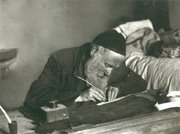












By: Reb Yechezkel Khayyat
Dovecotes of Non Jews
The Gemora lists the dovecote of a non-Jew as not meriting a trap free zone around it. The Rishonim discuss the reason for this. The Meiri states that the Gemora was only referring to non Jews who are barbaric and have no religion at all. These people’s property is not afforded any protection, due to their barbaric behavior. All other dovecotes are protected, even if not owned by Jews. Rashi, on the other hand, understands the restriction of traps to be a special protection accorded to fellow Jews, as a kindness. This kindness is not extended to non-Jews.
Slave Value
The Mishna states that to estimate nezek, we evaluate the value of a slave with and without the damage. The Shitah quotes Rav Yehonasan who says that we do not estimate how much the victim feels he lost due to the permanent damage done to his body, since that would be so extreme as to be unfair to the damager. One would never put a reasonable price on his own physical body parts, and the resulting estimation would be exorbitant.
Rashi states that the slave market we are referring to is the market for an eved ivri – a Jewish slave. The Ketzos explains that a Jew cannot be estimated as a non Jewish slave, since he would never be one. The Rosh, however, says the market is for non Jewish slaves. Rashi’s opinion is difficult, as Jewish slaves are only sold for six years, and therefore the difference in value will not accurately reflect the damage done. Rabbi Akiva Eiger says that even if we were to continually reevaluate the damages every six years (to reflect the ongoing loss), this would be unfair to the damager, since the ultimate sum will be much larger than the one time loss to a permanent non Jewish slave. The Maharshal suggests that Rashi agrees that the slave market used for estimation is that for non Jewish slaves, but that Rashi here is simply giving a rationale for applying such an estimation to a free man. Since a free man can sell himself as a slave, this indicates a monetary loss ascribable to the damage done to his body. See Ketzos 420:1 for more detail on Rashi’s opinion.
Rashi states that the slave market we are referring to is the market for an eved ivri – a Jewish slave. The Ketzos explains that a Jew cannot be estimated as a non Jewish slave, since he would never be one. The Rosh, however, says the market is for non Jewish slaves. Rashi’s opinion is difficult, as Jewish slaves are only sold for six years, and therefore the difference in value will not accurately reflect the damage done. Rabbi Akiva Eiger says that even if we were to continually reevaluate the damages every six years (to reflect the ongoing loss), this would be unfair to the damager, since the ultimate sum will be much larger than the one time loss to a permanent non Jewish slave. The Maharshal suggests that Rashi agrees that the slave market used for estimation is that for non Jewish slaves, but that Rashi here is simply giving a rationale for applying such an estimation to a free man. Since a free man can sell himself as a slave, this indicates a monetary loss ascribable to the damage done to his body. See Ketzos 420:1 for more detail on Rashi’s opinion.
Ayin Tachas Ayin
The Gemora explains how we know this verse is not literal. The Rambam (Chovel umazik 1:6) states that even though the straight reading of the verse is at odds with the halachah, the halachah comes from Moshe Rabbeinu himself, and has been always accepted. The commentators discuss why the Torah used this phrase, if the real meaning is not literal. The Ibn Ezra states that the Torah is telling us that if the damager would not pay money, it would be fitting for him to lose his eye. The Seforno similarly states that in a pure legal sense, the appropriate punishment would be physical, but the Torah was kind to allow monetary punishment instead. See the Ibn Ezra (Shmos 21:24) for a discussion of logical proofs to the monetary punishment.
The Gr”a states that the verse itself hints to the monetary punishment. The word Ayin is three letters – ayin, yud, nun. If we take the letters after each of those letters, we have the letters pei, kaf, samech. Rearranging those letters spells kesef – money. The verse tells us that for the eye, the damager pays tachas ayin – the letters below (after) ayin.
The Gr”a states that the verse itself hints to the monetary punishment. The word Ayin is three letters – ayin, yud, nun. If we take the letters after each of those letters, we have the letters pei, kaf, samech. Rearranging those letters spells kesef – money. The verse tells us that for the eye, the damager pays tachas ayin – the letters below (after) ayin.
 Read more!