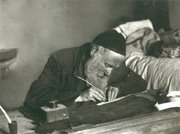












The Gemora relates that Achashverosh ordered Haman to get Mordechai, dress him in the royal garments and lead him through the city on the king’s horse proclaiming, “Thus shall be done for the man whom the king wishes to honor.” Haman located Mordechai teaching his students the laws of kemitzah (scooping the flour for the mincha offering).
Rashi states that this occurred on the sixteenth of Nissan, the day the korban omer is offered in the Beis Hamikdosh.
The Maharal explains the connection between the omer offering and the story of Purim. The Omer offering reveals the miracles that are hidden inside of nature. By bringing the first grain to the Beis Hamikdosh, we are demonstrating that even the nature of the world is governed by Hashem. This was the method used to overcome Haman. The miracles were concealed from the human eye. The means to conquer Haman and Amalek is by exposing the concealed miracles, thus confirming that all which appears natural is controlled by Hashem.
The idea that Amalek can only be defeated through natural means was mentioned before and it bears repeating.
The Mishna states that whenever Moshe held up his hand, Israel prevailed [against Amalek]…'. The Mishna asks, do Moshe's hands make or break the battle? Rather, this teaches you that so long as Israel were looking upwards and subjugating their hearts to their Father in Heaven, they were victorious; if not, they would fall.
The Netziv in Merumei Sadeh asks on the Mishna's question. What was so strange about Moshe's hands making the battle? Didn't Moshe's hands split the sea and perform other miracles as well through his hand?
He answers that the fight against Amalek had to be won in a natural way and not through a miracle. Perhaps we can add that fighting Amalek is in essence the fight that we have daily with our evil inclination. This fight could not be left to miracles. This is what is bothering the Mishna. Could the battle have been won through Moshe's hands like the other miracles? The Mishna's answer is no, it could not have been since this battle required a victory through natural means.
Let us examine the answer of the Mishna. Rather, this teaches you that so long as Israel were looking upwards and subjugating their hearts to their Father in Heaven, they were victorious; if not, they would fall. Isn't the Mishna stating that they relied on a miracle from Above. They looked upwards and they were victorious. How can this be explained?
The Gemora in Kiddushin (29b) relates an incident with Abaye and Rav Acha bar Yaakov. There was a certain demon that haunted Abaye's Beis Medrash, so that when two people entered, even by day, they were injured. Abaye instructed the community not to provide Rav Acha shelter when he would arrive in the city, thus forcing the father to spend the night at the Beis Medrash; perhaps a miracle will happen [in his merit]. Rav Acha entered the city and spent the night in that Beis Medrash, during which the demon appeared to him in the guise of a seven-headed dragon. Every time Rav Acha fell on his knees in prayer one head fell off. The next day he reproached them: ‘Had not a miracle occurred, you would have endangered my life.'
The Maharsha in his commentary to Kiddushin asks that how did Abaye have permission to place Rav Acha in such a precarious position. One is forbidden to rely on a miracle? He answers that Abaye understood the potency of Rav Acha's prayer. Abaye was certain that Rav Acha's prayers to the Almighty would be answered and that this is not a miracle. Hashem has instilled in this world the power of prayer and incorporated it into the natural order of the world.
This is what our Mishna is answering. Amalek has to be defeated through natural means and that is what Klal Yisroel did at that time. They cried out to Hashem and subjugated their hearts towards Him and were answered.
Rashi states that this occurred on the sixteenth of Nissan, the day the korban omer is offered in the Beis Hamikdosh.
The Maharal explains the connection between the omer offering and the story of Purim. The Omer offering reveals the miracles that are hidden inside of nature. By bringing the first grain to the Beis Hamikdosh, we are demonstrating that even the nature of the world is governed by Hashem. This was the method used to overcome Haman. The miracles were concealed from the human eye. The means to conquer Haman and Amalek is by exposing the concealed miracles, thus confirming that all which appears natural is controlled by Hashem.
The idea that Amalek can only be defeated through natural means was mentioned before and it bears repeating.
The Mishna states that whenever Moshe held up his hand, Israel prevailed [against Amalek]…'. The Mishna asks, do Moshe's hands make or break the battle? Rather, this teaches you that so long as Israel were looking upwards and subjugating their hearts to their Father in Heaven, they were victorious; if not, they would fall.
The Netziv in Merumei Sadeh asks on the Mishna's question. What was so strange about Moshe's hands making the battle? Didn't Moshe's hands split the sea and perform other miracles as well through his hand?
He answers that the fight against Amalek had to be won in a natural way and not through a miracle. Perhaps we can add that fighting Amalek is in essence the fight that we have daily with our evil inclination. This fight could not be left to miracles. This is what is bothering the Mishna. Could the battle have been won through Moshe's hands like the other miracles? The Mishna's answer is no, it could not have been since this battle required a victory through natural means.
Let us examine the answer of the Mishna. Rather, this teaches you that so long as Israel were looking upwards and subjugating their hearts to their Father in Heaven, they were victorious; if not, they would fall. Isn't the Mishna stating that they relied on a miracle from Above. They looked upwards and they were victorious. How can this be explained?
The Gemora in Kiddushin (29b) relates an incident with Abaye and Rav Acha bar Yaakov. There was a certain demon that haunted Abaye's Beis Medrash, so that when two people entered, even by day, they were injured. Abaye instructed the community not to provide Rav Acha shelter when he would arrive in the city, thus forcing the father to spend the night at the Beis Medrash; perhaps a miracle will happen [in his merit]. Rav Acha entered the city and spent the night in that Beis Medrash, during which the demon appeared to him in the guise of a seven-headed dragon. Every time Rav Acha fell on his knees in prayer one head fell off. The next day he reproached them: ‘Had not a miracle occurred, you would have endangered my life.'
The Maharsha in his commentary to Kiddushin asks that how did Abaye have permission to place Rav Acha in such a precarious position. One is forbidden to rely on a miracle? He answers that Abaye understood the potency of Rav Acha's prayer. Abaye was certain that Rav Acha's prayers to the Almighty would be answered and that this is not a miracle. Hashem has instilled in this world the power of prayer and incorporated it into the natural order of the world.
This is what our Mishna is answering. Amalek has to be defeated through natural means and that is what Klal Yisroel did at that time. They cried out to Hashem and subjugated their hearts towards Him and were answered.
 Read more!