






Showing posts with label chofetz chaim. Show all posts

Wednesday, February 03, 2010

Most People are Guilty of some sort of Thievery

By: Meoros HaDaf HaYomi

Dear Customer, Please Note: This Book is not Proofread at all

Rav Yehudah asserts in the name of Rav that most people are guilty of some sort of thievery and, as Rashbam explains (s.v. Rov begezel), this means that most people transacting business allow themselves to deny others their due profit. In other words, fraud, false pretenses and financial conniving are considered gezel.

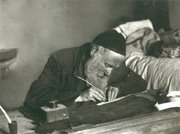
In his Sefas Tamim (Ch. 3), Rabeinu Yisrael Meir HaKohen zt”l, the Chafetz Chaim, proves that even one who causes his fellow a loss is considered a thief. True to his word, he was renowned for his extreme avoidance of anything resembling falsification or thievery, as evident from his behavior concerning the books he authored.

The Chafetz Chaim was in Warsaw when he first had his Mishnah Berurah printed and every day he would come to the printer to check that no smudged or otherwise defective pages were being sent out for sale. He left his learning for several months for this purpose and afterwards relied on his son to undertake the task. When he discovered that despite his great care, one of his books had been sold with a few defective pages, he hurried a sharp letter to his son, saying “What have you done to me, my son? All my life I’ve taken care to avoid anything resembling thievery but I never thought that I would err in outright robbery and because of you this has happened!” The Chafetz Chaim immediately ordered the printer to reprint those pages found defective and publicize in the press that anyone who had bought a defective edition should inform him of such in order to receive the corrected pages by post (Michtevei HeChafetz Chaim, p. 30).

The Chafetz Chaim knew no rest till he hired special proofreaders to examine each page of his printed books and, if approved, to mark the front page of each book as “proofread” (HeChafetz Chaim Ufo‟olav, I, Ch. 32). Some of these books are still extant.

The problem of printing errors also concerned other halachic authorities. For example, the students of the Tsadik HaGaon Rav Eliahu Lopian zt”l, led by the famed Yerushalmi Magid Rabbi Shalom Schwadron zt”l, published the popular Lev Eliahu with a warning on the front page: “Dear purchaser: This book is not proofread and I assume no responsibility – The Publisher.” We have no knowledge of the severity of the printing error discovered by the Chafetz Chaim but HaGaon Rav Yaakov Kanievski zt”l, the Steipler, states in a letter that the sale of a book containing minor errors that still allow readers to understand the text is not considered gezel. After all, anyone buying a book knows that the task of printing is complicated and hardly ever free of mistakes. In his opinion, a book with no pages missing may be sold even with some defects and therefore, when he found that the last letters on a page were omitted in an entire edition of his Kehilos Yaakov, he continued to sell that edition as the defect did not prevent understanding the text (Karyana D’igarta, I, p. 351). Of course, this principle applies only to publishers of new books but one is not permitted to sell defective sidurim, as finely proofread sidurim are available on the market and they are expected to be free of errors.

All the above is just a fraction of the material pertaining to this broad topic. The Gemora in Brachos (6a) explains that one who fails to respond to a greeting is called a robber, indicating that depriving a person even of his due word is defined as gezel (Sefer “Mamon Kasher”).

Once, Rabbi Elazar Shulevitz zt”l, Rosh Yeshivah of Lomzha, was standing praying Shemoneh Esreh at the entrance to a synagogue and Rabbi Yisrael Salanter, standing near him, approached him and whispered, “Robber! The synagogue is packed full and you’re robbing the congregation of air!” Rabbi Shulevitz immediately interrupted his prayer to move away (Lev Eliahu, Bereishis). Similarly, though in an opposite circumstance, the Vilna Gaon zt”l would take care to shut the door to the bathhouse immediately after entering lest he rob the bathers of the warm air inside (Tosefes Maaseh Rav, S.K. 29). According to the Chafetz Chaim, even someone who participates in a wedding or sheva berachos meal without enhancing the joy of the chassan, about whom the Gemora in Berachos (ibid) states that he transgresses “five voices”, might be guilty of robbery (Michtevei HeChafetz Chaim, p. 46).

Why the Labor Cost More

A simple tailor became close to Rebbe Noach of Lechovitz and the Rebbe persuaded him to refrain from the custom then common among tailors to demand clients to bring them extra cloth in order to benefit from the quantity remaining after their work. “This custom is outright thievery,” explained the Rebbe, “You may charge more for your labor but you mustn’t practice that foul custom.”

“And what should I tell my customers,” questioned the tailor, “if they ask me why I charge more yet need less cloth?”

“Tell them,” replied the Rebbe, “that you learnt to cut in a new way that doesn’t need a lot of cloth but that learning the method cost a great deal.”

The tailor obeyed the Rebbe’s instructions but after a while his customers remarked that he had already covered the expenses of learning the new method and asked why he continued to charge more.

“The new method,” he answered, “is a whole system to be learnt again every day and every week” (Hizaharu Bemamon Chavreichem, p. 366).

The Old Man Fell Asleep on His Coat

On the night following the demise of HaGaon Rav Elchanan Wasserman’s wife, his son Rabbi Naftali sat down and wept incessantly while several yeshivah students slept in an adjacent room. Rav Wasserman approached his son and told him, “You shouldn’t cry so loudly now. The boys might wake up and you would rob them of their sleep” (Or Elchanan, I, p. 13).

A similar story is told of Rabbi Avraham of Purisov. Despite his known tendency to conceal his behavior, he once learnt all night in the beis midrash, later explaining that an old man had fallen asleep on the edge of his coat. “I couldn’t, after all, stand up for fear of waking him!” (Chasidim Mesaperim, I).

Read more!

Friday, April 24, 2009

Lesson from the Chafetz Chaim

Subscribe to the Daily Daf Yomi Summary here.

It once happened that some Chasidim, in the days of the Chafetz Chaim, offended a well-known giant in Torah. The Chafetz Chaim was extremely disturbed about it, but he refused to issue a public protest about it. His rationale for this was based upon our Gemora (Bava Kamma 117b) : Rabbah ruled: If a man was chasing after a pursuer with the intention of rescuing the intended victim and he accidentally broke utensils, he is exempt, whether they belonged to the pursued or to any other person. This is not based on a matter of strict law, but it is based upon the following consideration: If you were not to rule like this, no person would ever be willing to rescue a fellow man from the hands of a pursuer. It emerges from here that in order to find people who are willing to rescue someone from the hands of a pursuer, it might come out that innocent people will consequently suffer. The Chasidim, explained the Chafetz Chaim, are fighting to save Klal Yisroel from its pursuers. It will happen that on account of this noble pursuit, innocent people will suffer as a result. [This does not mean to say that he is condoning such behavior at all; he is merely saying that if he would publicly take a stand against their movement, people will refrain from fighting noble causes.]

Read more!

Wednesday, January 07, 2009

Spending Money for a Mitzvah

Subscribe to the Daily Daf Yomi Summary here

Tosfos (Bava Kamma 9b) writes that it is evident from our Gemora that a person is not obligated to give up all of his possessions in order to fulfill a mitzvah, and even for a mitzvah that will pass in time, such as an esrog. It is further evident from the conclusion of the Gemora that one is not even obligated to give up a third of his possessions in order to fulfill a mitzvah. And furthermore, it is said regarding charity: One who gives liberally to charity should not give more than a fifth of his money, for then, he will be forced to beg for support himself.

All Mitzvos

The Rosh writes that this halacha applies by all mitzvos; one should not spend more than a fifth of his wealth on any specific mitzva, such as esrog or lulav. The Rambam and Rema seem to rule accordingly.

Why not Spend?

The Rishonim ask: Why would someone be exempt from performing a mitzvah just because it costs more than a fifth of his wealth? The Ra’avad answers that this is similar to halacha that one should make his Shabbos like an ordinary weekday, and not be forced to be supported from charity. This is because poverty is regarded as death, and one is not obligated to give up his life for an ordinary mitzvah.

The Biur Halachah writes (in his explanation of an opinion from the Beis Yosef) that not all mitzvos are compared to charity, for charity is a mitzvah that will not pass in time, and even if the poor people are before him, they can be supported by another person. That is why one would not be obligated to spend more than a tenth of his possessions. However, with respect to a mitzvah that will pass in time, it is possible that there would be an obligation to spend more than a tenth.

Reb Yaakov Emden asks: Why isn’t there an obligation to spend more for a positive commandment? Did we not learn regarding one who does not want to fulfill a positive commandment – we beat him until his soul departs him? Do we treat his money stricter than his life?

The Maharitz Chayus answers that we only beat him until his soul departs him when he is rebelling against the fulfillment of mitzvos; otherwise, we do not beat him, and he would not be required to spend all his money for it.

Lo Sa’aseh is Different

The Ra’avad adds that this halacha applies only to a positive commandment; however, one would be required to spend his entire wealth in order not to transgress a negative precept.

Must he Spend a Fifth?

The Gemora (Kesuvos 50a) states that one should not spend more than a fifth of his wealth to fulfill a mitzvah; is one halachically required to spend up to that amount, or is it only regarded as a mitzvah?

The Beis Yosef (Y”D; 249) writes that it is considered a mitzvah in the preferable manner if one spends up to a fifth of his wealth in order to perform a mitzvah. The Beis Yosef adds that although one can imply from the Gemora that it is not even a mitzvah to spend that amount because the Gemora states: One who spends liberally should not give more than a fifth of his wealth; however, even less than that would be regarded as spending liberally, and there would be no mitzvah whatsoever to spend that amount. Nevertheless, there is a Yerushalmi in Pe’ah that seems to indicate that there is a mitzvah to spend up to one-fifth of his wealth for a mitzvah.

In the sefer Ahavas Chesed, the Chafetz Chaim cites a Rambam in his explanation to the Mishnayos, who writes that there is a halachic obligation to spend up to one-fifth of one’s wealth for charity. He asks form our Gemora, which would seem to indicate that there is no such obligation. He answers that our Gemora is discussing a case where the poor people are not present and someone is searching to find them in order to give them charity. In such a situation, there is not even a mitzvah to give up to one-fifth. However, the Yerushalmi and the Rambam are speaking about a case where the poor person is in front of you; then, there would be a halachic obligation to give up to one-fifth.

Spending More than a Fifth

What if one wants to spend more than a fifth? Is he allowed to? It is evident from the Rambam in his explanation to the Mishnayos that it is regarded as virtuous (midas chassidus) for one to spend more than a fifth. However, it can be inferred from the Rambam in halachos that one should not spend more than a fifth of his wealth on a mitzvah.

The Chafetz Chaim reconciles the two rulings of the Rambam in the same manner as before. If the poor person is present, it would be regarded as midas chassidus to spend more than a fifth, and that is what the Rambam in his explanation to the Mishnayos is discussing. However, when the poor people are not present and one is chasing after them, he should not spend more than a fifth.

The Shitah Mekubetzes writes that one is permitted to spend more than a fifth of his wealth if it is to support the studying of Torah. The Ahavas Chesed explains the reasoning for this. One who supports another fellow to learn Torah is creating a partnership with him; the supporter receives a reward together with the one who is learning the Torah. One is permitted to purchase this reward for himself even if it will cost him more than a fifth.

Reb Moshe Feinstein (Igros Moshe (Y”D, 4:37) rules that this is correct only if the supporter specifically negotiates with the one studying Torah to create a partnership of Yissochar and Zevulun. However, if the provider is just donating money to support Torah, he is not permitted to give more than a fifth.

The Ibn Ezra in Mishlei (4:7) writes that one is permitted to spend more than a fifth of his wealth in order to study Torah himself. The Chafetz Chaim in Likutei Halachos (Yoma 12a) also rules like that. However, the Netziv in the Shiltos states that this is a matter of dispute between two Amoraim. The Gemora in Eruvin cites the verse that Torah is not in the Heavens. Rav Avdimi says: If it would be in the heavens, one would be obligated to go there and learn. It is evident that one would be forced to spend more than a fifth of his wealth to study Torah, for otherwise, he could claim that it costs too much to travel to the Heaven. However, Rava disagrees regarding the interpretation of that verse, and according to him, one would not be allowed to spend more than a fifth in order to study Torah.

The Rema (Y”D, 249:1) seems to hold that one can give away more than one-fifth of his wealth to charity right before he dies. It is brought in the name of Rabbeinu Yonah that even then, he should not.

It is written in Ahavas Chesed that one who is a free-spender in regards to himself and his family, i.e., he splurges on expensive clothing, builds for himself a fancy mansion and generally leads a luxurious lifestyle; it is permitted for him to give to charity more than a fifth of his wealth.

Some say that if one finds himself in dire straits, he is permitted to spend more than a fifth with the intention that it should be on account of this deed that he will merit a salvation. It is brought in the name of the Bnei Yissoschar that one who requires atonement on a specific sin is also permitted to give away more than a fifth.

Read more!

Monday, November 10, 2008

Don't Call him Evil

Subscribe to the Daily Daf Yomi Summary here

The Gemora Kiddushin Daf 28 states: One who calls someone else a slave should be excommunicated! If he calls him a mamzer, he receives lashes! If he calls him an evil person, he (the insulted person) may descend against his life (he is permitted to hate him to such an extent that he may attempt to reduce his income).

Rashi in Bava Metzia (71a) explains this to mean that the insulted person may fight with him as if the libeler hit him, and it is as if he was coming to kill him. Furthermore, Rashi heard that he can compete against him in his line of business in an attempt to decrease his income.

Rashi asks that it is hard to understand how the Chachamim would allow this person to take revenge.

Some answer that here it is permitted because he suffered personally and he was subject to a public humiliation. The Chafetz Chaim, however, writes that it is unclear if this is the accepted halachah, and therefore, one should be stringent in the matter and not take revenge.

Others answer that it is permitted because if people think that he is indeed an evil person, his income will suffer tremendously, for people will not have compassion on him.

Tosfos in Bava Metzia writes in the name of the Gaonim that it is permitted to burn one-third of his grain. Tosfos concludes that this is bewildering, for where is the source for this?

Read more!

Friday, June 13, 2008

Teaching Torah to Girls

Rabbi Eliezer said (Daf Yomi: Sotah 21b): If someone teaches his daughter Torah, he is teaching her lewdness.

Tosfos cites a Yerushalmi which notes that Ben Azzai does not follow the exposition of Rabbi Elozar ben Azaryah. For it is written regarding the mitzvah of Hakhel that men, women and children should assemble. The men come to learn, the women come to listen and the children come so that those who brought the children can earn reward. According to Ben Azzai, the reason why the women come is to learn, just like the men. However, according to Rabbi Elozar ben Azaryah, who holds that one should not teach his daughter Torah, the women are not coming to learn; but rather, they are listening to the words of Torah in order for them to know how to fulfill the mitzvos that they are commanded to perform.

The Rambam rules that a woman who studies Torah receives reward, but not in the same capacity as a man. However, the Chachamim commanded a father not to teach Torah to his daughter, for women, in general, are not capable of understanding the intricacies and the fine details of the Torah, and it will lead them to incorrect halachic conclusions. This admonition is only applicable to the Oral Law; however with respect of the Written Law, one should not teach it to her, but if he does, it is not regarded as if he taught her lewdness.

The Maharatz Chiyos asks: According to the Rambam, Rabbi Elozar ben Azaryah could also expound the verse by Hakhel to be saying that the women are coming to learn Torah, for there, the king was teaching the Written Law, and there is no prohibition whatsoever to teach that to her!?

He writes that after careful scrutiny of the Rambam’s language, it is clear that there is a prohibition to teach one’s daughter the Written Law; however, it is not with the same degree as the prohibition regarding the Oral law.

The Tur (Y”D 246:6) seemed to have a different version of the Rambam, for he writes that the Rambam holds that the concept of lewdness only applies by the Written Law, but with respect of the Oral Law, there is no lewdness; however, one should not teach it to her, but if he does, it is not regarded as if he taught her lewdness.

The Beis Yosef writes that it must be a printer’s mistake in the Tur, for the Rambam says the exact opposite.

The Rama rules that the laws pertaining to a woman, she is obligated to learn. The Bach writes that it is for this reason that a woman recites a birchas HaTorah in the morning.

The Aruch Hashulchan comments that it was never the custom for women to learn from a sefer. They were taught orally all the halachos that were relevant to them.

The Chafetz Chaim in Likutei Halachos writes that these halachos only applied in earlier times when the children lived in the same place as their parents and the tradition was strong. Then, it was forbidden to teach the women Torah, and the women followed the examples of the previous generations. However, in today’s times, when children live far away from their parents and the tradition has been weakened, and especially because the woman are studying the language and writings of the secular world, it is an important obligation to teach the girls Chumash, Prophets, the Writings, Pirkei Avos and the ethical teachings of our sages in order to strengthen their faith. For if not, they are liable to stray from the correct path of Hashem. The Steipler Gaon writes that in today’s times, it is more dangerous not to teach them Torah than to teach them. He even rules that one is allowed to teach Mishna to girls. However, Reb Moshe Feinstein (Y”D III, 87) rules that Mishna is part of the Oral Law, and the original prohibition is still intact, and therefore, girls should not be taught Mishna in school.

Read more!

Tuesday, April 15, 2008

Pauper Acting Rich

The braisa (Daf Yomi: Nazir 25b - 26a) states: Other people who are obligated to bring bird offerings by the Torah (because they cannot afford to buy animal offerings) who already designated the money to buy the birds (and then became rich), if they now want to bring a chatas or olah offering instead, they may do so.

The Mefaresh understands this Gemora to be referring to a rich woman who has given birth, where her chatas is a bird.

It is noteworthy that after the Torah discusses the korban that a rich woman who has given birth brings, it says [Vayikra 12:7]: This is the law of a woman who gives birth to a male or to a female. The question is asked: Immediately following this verse, the Torah teaches us the korbanos that a poor woman who has given birth brings. Why would the Torah say regarding the rich woman’s korbanos that “this is law of a woman who gives birth”? It would seem from the verse that only the rich woman’s korbanos are the law, and not the korbanos from the poor woman.

The Kli Chemdah (Parshas Tazria) cites a Gemora in Menochos (110a): It is written: This is the law of an olah. The Gemora expounds: Anyone that studies the laws of an olah is considered as if he brought a korban olah. What would be if a poor person would recite the portion dealing with the rich person’s korbanos? Would it be regarded as if he brought the korban? The answer may be gleaned from the fact that the Torah concluded the portion dealing with the rich woman’s korbanos with the following verse: This is the law of a woman who gives birth. The Torah is informing us that the recital of this portion is sufficient for anyone, even for a poor woman.

[The Gemora states that Hashem told Avraham Avinu that whenever Klal Yisroel will read the Torah portions pertaining to the korbanos, it will be regarded as if they brought korbanos and their sins will be forgiven.

The commentators discuss if this concept applies by other mitzvos as well. Perhaps it can be said that the studying of any mitzvah that cannot be performed nowadays will be regarded as if one fulfilled the mitzvah.

The Chafetz Chaim cites the Gemora in Bava Metzia (114b) that the Amoraim were fluent in Seder Kodoshim in the same manner as Seder Moed, Nashim and Nezikin. This is because Kodoshim was relevant to them since the learning about the korbanos was regarded as if they actually brought a korban. Implicit in his words that for some reason this was only true regarding Seder Kodoshim and not to Seder Zeroim or Taharos which also has many halachos that do not apply outside of Eretz Yisroel and after the destruction of the Beis Hamikdosh.

The Taz in his sefer Divrei Dovid maintains that the concept applies to all mitzvos and one who studies the laws of Zeraim, it will be regarded as if he gave terumos and ma’asros to the kohanim and levi’im and it will be considered as if he gave all the presents to the poor people. This is the explanation in Yaakov’s words to Esav "Im Lavan garti," which Chazal understand to mean that Yaakov kept all 613 mitzvos in Lavan’s house. There were many mitzvos that he was not able to fulfill at that time; it is evident that the studying of these mitzvos are regarded as if he fulfilled them all.

The Ben Ish Cahi explains the verse in Nitzavim: "Ki Korov eilecha hadavar meod b’ficha u’vilvov’cha la’asoso." It is possible to fulfill all the mitzvos with your mouth (by studying them) even those mitzvos that you cannot actually perform.]

We can add that the Mishna in Negaim compliments this explanation. For the Mishna says that if a poor person who is a metzora brings the korban that a rich person is supposed to bring, he fulfills his obligation. The Chinuch (123) states by a korban olah v’yoreid - (certain sins which require a korban chatos, he either brings an animal, bird or flour offering depending on his status - this is called a fluctuating korban) if a poor person brings the korban of a rich person, he does not fulfill his obligation. The Chinuch explains the reason: the Torah had compassion on the poor person, it is not proper for him to compel himself to bring a korban which he cannot afford. How can the Chinuch hold against the Mishna, which explicitly states that he does fulfill his obligation?

The Chasam Sofer answers based on the following Gemora in Shabbos: Hashem punishes each person according to what he can afford. A rich person who sins will lose his cow. A poor person, on the other hand, will lose his chicken or some eggs. Therefore, there is a distinction between the korban of a metzora or a woman who gave birth and the korban olah v’yoreid. A metzora is not required to bring a korban because he sinned, it is to purify him and allow him to eat kodoshim. If a poor metzora decides to bring the rich man’s korban, he will have discharged his obligation. Conversely, a sinner who does that will not have discharged his obligation, for here the Torah prescribed for him the korban which will give him atonement according to his status. The korban is in place of the punishment. It is not decided by the pauper what his punishment should be, and therefore when he brings the korban of a rich person, he does not fulfill his obligation.

The Sfas Emes (here and quoted in Moadim U’zmanim as a story which occurred by a Kenesiya Gedola) answers that there is a basic distinction. A metzora disregarding if he is rich or poor, is required to bring a chatas and an olah. The rich man brings animals and the pauper brings birds. If a poor person brings the korban of a rich person, he fulfills his obligation, for he brought the prescribed amount. A korban olah v’yoreid is different. A rich person brings an animal for a korban chatas and a poor person brings two birds, one for a chatas and one for an olah. If a poor person will force himself to bring the korban of a rich person, he will not fulfill his obligation because he cheated the Altar out of one korban - namely the olah.

There are two questions on this explanation (look in Shemuas Chaim and in Mitzvas Hamelech from Harav Ezriel Cziment). Firstly, the Chinuch says a different reason for his not fulfilling his obligation. He says because the Torah doesn’t want a poor person to overburden himself. He does not say the reason of the Sfas Emes that he missed a korban? Secondly, one must ask, why is it that a poor person is required to bring two korbanos and a rich person only brings one? The Ibn Ezra explains the reason for this: A chatas bird is completely eaten and an olah bird is completely burned on the Altar. These two birds together replace a regular korban which entails a human consumption and the Altar’s consumption. They are actually one korban. Therefore, one can say that a poor person is not missing a korban by bringing one animal instead of two birds?

It would seem, however, that this question can be answered. Even according to the Ibn Ezra, the two birds are not one korban. They are two korbanos complimenting one another. The rationale behind bringing the two korbanos could be because the Torah wants human consumption and the Altar’s consumption; nevertheless, it is still two korbanos and a poor person is missing one korban when he brings the korban of a rich person.

Read more!

Friday, December 21, 2007

Light of Torah

Rabbi Elozar said (Kesuvos 111b): One who uses the light of Torah, the light of Torah will revive him; those that do not use the light of Torah, the light of Torah will not revive them.

The Chafetz Chaim explains: Every Jewish person merits a portion in the World to Come. The distinction is as follows: The soul of a person will bask in the pleasure of Gan Eden because it is the soul of a Jewish person; however, regarding the body, which has already become dust, nothing will revive it except for the light of Torah that he learned himself, or if he supported others in their study of Torah and certainly if he provided for his children the ability to learn Torah. Those people that did none of these things will merit a share in Gan Eden, but are in grave danger of not being resurrected.

The Beis Halevi explains: There is a distinction between an article that was used for holiness and one which was used for a mitzvah. An article used for a mitzvah may be discarded immediately after usage because the holiness has ceased upon the completion of the mitzvah. However, regarding an article used for holiness, the holiness remains forever; it must be treated as a holy object and may not be discarded.

The body of someone who learns Torah is considered an article of holiness; even after he dies, the holiness remains and that is what revives him at the time of Resurrection. However, concerning one who does not study Torah, his body is regarded as an article that was used for a mitzvah; when he dies, his body does not retain the holiness and he cannot revive at the time of Resurrection.

Read more!

Sunday, October 21, 2007

Spending More than a Fifth

Rabbi Ila said: It was decreed in Usha that one who gives liberally to charity should not give more than a fifth of his wealth (for then, he will be forced to beg for support himself).

A braisa is cited to support this ruling: One who gives liberally to charity should not give more than a fifth of his money, for then, he will be forced to beg for support himself. There was an incident with a fellow who wished to give to charity more than a fifth of his wealth and his friend did not allow him to. Who was this friend? Rabbi Yesheivav. Others say: Rabbi Yesheivav wished to give to charity more than a fifth of his wealth and his friend did not allow him to. Who was this friend? Rabbi Akiva.

The Rosh writes that this halacha applies by all mitzvos; one should not spend more than a fifth of his wealth on any specific mitzva, such as esrog or lulav. The Rambam and Rema seem to rule accordingly.

The Rishonim ask: Why would someone be exempt from performing a mitzvah just because it costs more than a fifth of his wealth? The Ra’avad answers that this is similar to halacha that one should make his Shabbos like an ordinary weekday, and not be forced to be supported from charity. This is because poverty is regarded as death, and one is not obligated to give up his life for an ordinary mitzvah.

The Ra’avad adds that this halacha applies only to a positive commandment; however, one would be required to spend his entire wealth in order not to transgress a negative precept.

The Gemora stated that one should not spend more than a fifth of his wealth to fulfill a mitzvah; is one halachically required to spend up to that amount, or is it only regarded as a mitzvah?

The Beis Yosef (Y”D; 249) writes that it is considered a mitzvah in the preferable manner if one spends up to a fifth of his wealth in order to perform a mitzvah. The Beis Yosef adds that although one can imply from the Gemora that it is not even a mitzvah to spend that amount because the Gemora states: One who spends liberally should not give more than a fifth of his wealth; however, even less than that would be regarded as spending liberally, and there would be no mitzvah whatsoever to spend that amount. Nevertheless, there is a Yerushalmi in Pe’ah that seems to indicate that there is a mitzvah to spend up to one-fifth of his wealth for a mitzvah.

In the sefer Ahavas Chesed, the Chafetz Chaim cites a Rambam in his explanation to the Mishnayos, who writes that there is a halachic obligation to spend up to one-fifth of one’s wealth for charity. He asks form our Gemora, which would seem to indicate that there is no such obligation. He answers that our Gemora is discussing a case where the poor people are not present and someone is searching to find them in order to give them charity. In such a situation, there is not even a mitzvah to give up to one-fifth. However, the Yerushalmi and the Rambam are speaking about a case where the poor person is in front of you; then, there would be a halachic obligation to give up to one-fifth.

WHEN CAN ONE SPEND
MORE THAN A FIFTH ?

What if one wants to spend more than a fifth? Is he allowed to? It is evident from the Rambam in his explanation to the Mishnayos that it is regarded as virtuous (midas chassidus) for one to spend more than a fifth. However, it can be inferred from the Rambam in halachos that one should not spend more than a fifth of his wealth on a mitzvah.

The Chafetz Chaim reconciles the two rulings of the Rambam in the same manner as before. If the poor person is present, it would be regarded as midas chassidus to spend more than a fifth, and that is what the Rambam in his explanation to the Mishnayos is discussing. However, when the poor people are not present and one is chasing after them, he should not spend more than a fifth.

The Shitah Mekubetzes writes that one is permitted to spend more than a fifth of his wealth if it is to support the studying of Torah. The Ahavas Chesed explains the reasoning for this. One who supports another fellow to learn Torah is creating a partnership with him; the supporter receives a reward together with the one who is learning the Torah. One is permitted to purchase this reward for himself even if it will cost him more than a fifth.

Reb Moshe Feinstein (Igros Moshe (Y”D, 4:37) rules that this is correct only if the supporter specifically negotiates with the one studying Torah to create a partnership of Yissochar and Zevulun. However, if the provider is just donating money to support Torah, he is not permitted to give more than a fifth.

The Ibn Ezra in Mishlei (4:7) writes that one is permitted to spend more than a fifth of his wealth in order to study Torah himself. The Chafetz Chaim in Likutei Halachos (Yoma 12a) also rules like that. However, the Netziv in the Shiltos states that this is a matter of dispute between two Amoraim. The Gemora in Eruvin cites the verse that Torah is not in the Heavens. Rav Avdimi says: If it would be in the heavens, one would be obligated to go there and learn. It is evident that one would be forced to spend more than a fifth of his wealth to study Torah, for otherwise, he could claim that it costs too much to travel to the Heaven. However, Rava disagrees regarding the interpretation of that verse, and according to him, one would not be allowed to spend more than a fifth in order to study Torah.

The Rema (Y”D, 249:1) seems to hold that one can give away more than one-fifth of his wealth to charity right before he dies. It is brought in the name of Rabbeinu Yonah that even then, he should not.

It is written in Ahavas Chesed that one who is a free-spender in regards to himself and his family, i.e., he splurges on expensive clothing, builds for himself a fancy mansion and generally leads a luxurious lifestyle; it is permitted for him to give to charity more than a fifth of his wealth.

Some say that if one finds himself in dire straits, he is permitted to spend more than a fifth with the intention that it should be on account of this deed that he will merit a salvation. It is brought in the name of the Bnei Yissoschar that one who requires atonement on a specific sin is also permitted to give away more than a fifth.

Read more!

Sunday, March 11, 2007

Daf Yomi - Moed Katan 2 - Incident with the Chafetz Chaim

Reb Moshe Bik used to say over the following incident: It once happened in Radin that there were several men that passed away one after the other in a very short span of time. They called a gathering to contemplate as to what was the message that Hashem was sending them.

The Chafetz Chaim arose and proclaimed that the Mesechta Moed Katan is complaining to the Ribino shel Olam that it is a Mesechta that the Yeshivos do not learn. Only mourners learn this Mesechta and that is why many people were passing away.

(Sefer Meir Einei Yisroel 2: P. 239)

Read more!

Sunday, February 04, 2007

Daf Yomi - Taanis 27 - Studying the Mitzva can be Regarded as Fulfilling it

The Gemora states that Hashem told Avraham Avinu that whenever Klal Yisroel will read the Torah portions pertaining to the korbanos, it will be regarded as if they brought korbanos and their sins will be forgiven.

The commentators discuss if this concept applies by other mitzvos as well. Perhaps it can be said that the studying of any mitzva that cannot be performed nowadays will be regarded as if one fulfilled the mitzva.

The Chafetz Chaim cites the Gemora in Bava Metzia (114b) that the Amoraim were fluent in Seder Kodoshim in the same manner as Seder Moed, Nashim and Nezikin. This is because Kodoshim was relevant to them since the learning about the korbanos was regarded as if they actually brought a korban. Implicit in his words that for some reason this was only true regarding Seder Kodoshim and not to Seder Zeroim or Taharos which also has many halachos that do not apply outside of Eretz Yisroel and after the destruction of the Beis Hamikdosh.

The Taz in his sefer Divrei Dovid maintains that the concept applies to all mitzvos and one who studies the laws of Zeraim, it will be regarded as if he gave terumos and ma'asros to the kohanim and levi'im and it will be considered as if he gave all the presents to the poor people. This is the explanation in Yaakov's words to Esav "Im Lavan garti," which Chazal understand to mean that Yaakov kept all 613 mitzvos in Lavan's house. There were many mitzvos that he was not able to fulfill at that time; it is evident that the studying of these mitzvos were regarded as if he fulfilled them all.

The Ben Ish Cahi explains the passuk in Nitzavim: "Ki Korov eilecha hadavar meod b'ficha u'vilvov'cha la'asoso." It is possible to fulfill all the mitzvos with your mouth (by studying them) even those mitzvos that you cannot actually perform.

Read more!

Thursday, January 25, 2007

Daf Yomi - Taanis 17 - STORY REGARDING KOHANIM

The Ponovezher Rav relates the following story. He recalled how it was only a short while after he arrived to the Yeshiva in Radin and one morning after Shacharis, the Chafetz Chaim was standing by the doorway of the Yeshiva with his tallis bag in his hand. He looked at me in a striking manner as the baalei mussar commonly do when they wish to speak with someone. I went over to him and he grabbed my arm and said, “You are kohanim and I want to ask you a question. The Gemora in Taanis 17a states that Rebbe maintains that it is appropriate for kohanim nowadays to abstain from drinking wine. This is because we anticipate the rebuilding of the Beis Hamikdosh at any moment and the kohanim will be needed to perform the service. However, since the kohanim cannot identify as to which mishmar they belong to and there will be a long line of kohanim by Eliyahu Hanavi discovering their mishmar, by that time the effect of the wine will dissipate and they will be able to perform the service.”

The Chafetz Chaim continued, “This is a legitimate answer regarding wine, but what will a kohen who is not familiar with the correct methods of performing the service do? Kohanim who are not proficient in all facets of the service will not be able to serve. Sleep and traveling can help a drunkard but what is the remedy for an ignorant kohen?”

He concluded by telling me “You are a kohen and we are anxiously awaiting Mashiach’s arrival any moment. You must be prepared to perform the service in the Beis Hamikdosh. It is essential that you begin to learn the halachos of kodoshim immediately.”

The Ponovezher Rav said, “I had just arrived from learning in Telz and I was accustomed to making distinctions. I answered the Chafetz Chaim and regrets what I said then even today.
I told him that since he, the Chafetz Chaim was a kohen, and he is proficient with all the laws of kodoshim, so I will observe how the Rebbe performs the service and I will do it in that precise manner.”

The Chafetz Chaim didn’t retract and said sternly, “Nevertheless, it is incumbent upon you to learn kodoshim.”

It was these words that inspired the Ponovezher Rav to join the Kodoshim Kollel.

The Maggid from Eretz Yisroel, Rav Yaakov Galinsky says over that the Ponovezher Rav once told him this story in his house and he added one point. The Rav was greatly disturbed as to how he could have even contemplated that he would merit being able to stand next to the Chafetz Chaim in the Beis Hamikdosh.

The Chafetz Chaim told him then that the Gemora Sotah (5a) states that Hashem says regarding one who is haughty, “I and him cannot exist in the world together.”

Why is one who is conceited worse than a wicked person or a thief that they both can merit Hashem’s kindness and they are not pushed away so strongly?

The Chafetz Chaim explained that one who is haughty is actually a fool. Regarding what can a person honestly brag about? Everything comes from Hashem. A person that understands that and nevertheless chooses to be arrogant, he is a foolish person and Hashem does not reside together with fools. (Meir Einei Yisroel – chelek hey)

Read more!

Friday, January 19, 2007

Daf Yomi - Taanis 11 - Sharing in the Suffering and this Week's Parsha

Rav Yehuda said in the name of Rav that one, who starves himself during a famine year when other Jews are in distress, will be saved from an unusual death.

Rish Lakish rules that one who has children should not engage in marital relations during a famine year.

The Gemora cites a braisa regarding one who distances himself from the community while they are suffering; two Heavenly angels will place their hands on him and declare that he should not see the comfort of the community when they are released from their affliction.

A similar braisa is cited which states that at the time when the community is suffering, one (who is not afflicted) should not say that he will go to his house, eat and drink and not be concerned about anyone else. It is said regarding one who neglects the anguish of the community that Hashem will not forgive him for this sin.

The braisa proves from Moshe that one should suffer together with the community. It is written that Moshe’s hands were heavy and he sat on a stone. The Gemora wonders why Moshe didn’t use a pillow or a mattress in order to sit comfortably. The answer given is that Moshe said if Klal Yisroel were suffering (due to the war with Amalek), he will suffer along with them.

The Maharsha writes that we learn from this Gemora that a person is obligated to share in his friend's suffering even if he is not in distress at all. The famine did not affect Yosef and the war didn't affect Moshe and yet they felt it necessary to join in the suffering.

The Ohev Yisroel comments similarly that Amalek attacked Klal Yisroel because they became lax in Torah. Moshe did not have this fault at all and nevertheless he felt obligated to share in their distress.

Rav Aharon Kotler writes that it seems from this Gemora that not sharing in the suffering of others is tantamount to desecrating Hashem's name since our Gemora cites a Scriptural verse that one will not have atonement for this sin until hid death. This is the precise verse that the Gemora in Yome mentions regarding desecrating Hashem's name. This can be explained by the following: one of Hashem's attributes is that He suffers along with Klal Yisroel. The Iyun Yaakov comments that one has to join in the distress of others because there is an obligation to attach yourself to Hashem. He is compassionate so we should be as well. someone who shirks this responsibility is desecrating Hashem's name.

I noticed a vort on this week's parsha on this topic in the sefer Ner Shabbos and my friend Reb Oizer wrote this up as well.

After listing the sons of Jacob’s two oldest sons, Reuven and Shimon, the Torah records, “And these are the names of the sons of Levi in order of their birth: Gershon, Kehas, and Merari.” Why does the Torah emphasize that it is stating the names of Levi’s sons, a point which isn’t mentioned with regards to the sons of Reuven and Shimon?

The Shelah HaKadosh answers based on Rashi’s comment (5:4) that the tribe of Levi wasn’t included in Pharaoh’s enslavement of the Jews and therefore lived relatively easy and comfortable lives. It would have been easy for them to isolate themselves in Goshen, learning Torah all day and turning a blind eye to the plight of their brethren.

In order to combat such natural feelings, Levi specifically gave his children names which would eternally remind them of the suffering of the rest of the Jews. The name Gershon alludes to the fact that the Jews were considered foreigners and temporary dwellers in Egypt, not fitting in and belonging there no matter how easy life may have been in Goshen. K’has hints to the fact that the backbreaking labor set their teeth on edge, and Merari refers to the bitterness of the Egyptian enslavement.
So many times we hear of pain and suffering – with illness, jobs, finding a spouse, raising children, or in Israel – and our first reaction is to dismiss it as not germane to our comfortable lives, but Levi teaches that the suffering of every single Jew is indeed relevant and we must feel their plight!

The Chofetz Chaim’s wife once panicked when she awoke in the middle of the night to find his bed empty. Upon finding him sleeping on the floor, he explained to his puzzled Rebbitzin that with World War I raging all around them and Jews being chased from their houses all across Europe, how could he possibly allow himself the comfort of sleeping in a comfortable bed?

Similarly, when a great fire once ravaged most of the Jewish section of the town of Brisk, Rav Chaim Soloveitchik (the Rav of the town, whose house was spared) insisted on sleeping in the synagogue together with the rest of his homeless congregants in order to share in their suffering. Not at all surprising, considering that the Chofetz Chaim was a Kohen and Rav Chaim a Levi, and they clearly learned well the lessons of their great-great grandfather!

Read more!