




Monday, January 29, 2007

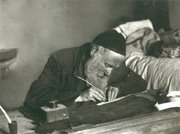
Daf Yomi - Taanis 21 - Studying in Yeshiva


DEI’AH VEDIBUR INFORMATION AND INSIGHT

Preparation for Mattan Torah
Through the Forty-Eight Acquisitions (Kinyan Torah)

Acquiring `Yishuv' can only be Done through Sitting in [Yeshiva] Study

by HaRav Matisyohu Salomon

The reason why we study the chapter of Kinyan Torah before Shavuos

The forty-eight ways to acquire Torah are enumerated in the sixth chapter of Pirkei Ovos, that is sometimes called Kinyan Torah. Even though several reasons are stated, it is worthwhile reviewing the thoughts of the Chossid Yaavetz as quoted in Midrash Shmuel as follows:
Torah can only reside in a [human] vessel which is devoid of evil traits and filled with worthwhile attributes. This is what Hashem hinted at when He said (right before Mattan Torah), "Prepare yourself for three days time. Do not approach a woman" (Shemos 19:15). The Jews were also told to launder their clothing and to purify it from the contamination and dirt which prevent a soul from ascending. All the chapters preceding this are filled with important practices which draw a person's soul closer to its Creator and rouse a person to better serve Him.

This is why it is customary to study this chapter before Shavuos, commemorating the Giving of the Torah, in order to draw Divine mercy upon those who are already worthy, as happened to our ancestors in this season. The entire chapter evokes a yearning for Torah and a love towards it. And even if the other chapters talk about this as well, this one is wholly devoted to the subject of acquiring Torah and it is a summary of all that precedes it.

To be sure, we must always strive to acquire Torah, but this particular season is more conducive to it due to the impact and inspiration which Jewish souls received at that time in history and which sparks and re-ignites our own souls at this time as well.

This chapter is called Kinyan Torah because it concerns those important traits which must precede our entering a covenant of Torah. They must enter a person like water so that he delve in Torah purely for its own sake, just as it is written about Rachel, the wife of R' Akiva. "She saw that he was unassuming and said [to him]: I will agree to be married to you on condition that you go study." In the end, he became the famous R' Akiva.

This chapter begins with the teaching of R' Meir, who was his disciple, and it is studied right before Shavuos, which commemorates the Giving of the Torah. R' Simcha Zissel of Kelm zt'l wrote a letter to his son on erev Shavuos (in Ohr RaShaZ, parshas Emor), explaining that this is why we count forty-nine days before the Giving of the Torah: they are an introduction, a preface, to the acquisition of Torah in nature, to prepare a person so that he and the Torah will be one. It is written first, "That his desire be Hashem's Torah," and afterwards, "and he shall delve in his own Torah . . . "

Upon each of the forty-eight days one should study a different `gateway' so that on the forty-ninth, they will all be united into one single entity. By being unified, a person will find it easier to enter the inner sanctum of the secrets of Torah, which is wholly sweet and preciously desirable. There is no better preparation than this.

How fitting it is to conclude with the words of the Ohr HaChaim on Chukas where he writes: There is no commandment which does not incorporate esoteric secrets which were revealed to Moshe. A person should strive to acquire Torah through the forty-eight ways enumerated in Mishnas Chassidim, for then he becomes privy to the secrets of Torah which were revealed to Moshe at Sinai. Moshe revealed these secrets, as well as the reason and the basis for the mitzvos, to the Jews of his generation.

"And you shall heed My commandments" (Vayikra 26:3). On this posuk he comments that this can be fulfilled through acquiring the Torah in the forty-eight ways mentioned in Pirkei Ovos (Mishnas Chassidim). Not everyone who desires Torah can possess it. He must do so through the 48 steps. This is what is meant by "If you walk in My statutes." If you wish to possess Torah, you must fulfill the condition of "and you shall keep My commandments and do them." This refers to the 48 steps.

In Emunah uBitochon (chapter 3, os 9) by the Chazon Ish, it is written that the Torah is acquired through 48 ways, each of which is supernatural; one must leave behind habit, human nature and foibles, and strive for perfection until he reaches the stage where he is not disturbed or hindered in his devoted aspiration and powerful diligence.

Why is Prayer Not Included in the 48 Steps?

In maseches Niddah 70b we find: The people of Alexandria asked R' Yehoshua ben Chananya what a person should do in order to grow wise. He said: Let him increase his Torah study and reduce the time he spends in engaging in trade.

They said: But many have tried that and not succeeded. What then?

Let them ask for mercy from the One Who possesses all the wisdom, as it is written, "For Hashem shall grant wisdom; from His mouth, knowledge and understanding" (Mishlei 2:6).

What does this mean? Why did he have to suggest that they increase their study time if wisdom is dependent upon Divine mercy? Because one without the other is of no avail.

In other words, since one cannot achieve or attain anything without prayer, it is clear that even Torah knowledge cannot be acquired without accompanying prayer. In fact, the lack of prayer is a very crucial reason why so many tried to increase study time but found that they did not increase their wisdom. If this is so, it seems strange that no mention was made of prayer as one of the forty-eight ways of acquiring Torah knowledge.

We also found it written in Pirkei Ovos (1:2) that the world stands on three things: Torah, avodoh, gemilus chassodim. Rabbenu Yonah explains that avodoh signified the sacrifices, but now that the Beis Hamikdosh is destroyed our prayers take the place of those sacrifices. "And to serve Him with your whole heart." How does one serve with the heart? Through prayer.

Prayer is not only a substitute or an aid; it is a goal unto itself. Anything that is lacking in the world is purposely this way in order to get us to pray to Hashem and worship Him. Prayer is a pillar unto itself, equal to Torah and gemilus chassodim in the upkeep of the world and the channeling of Hashem's bounty to the world, both materially and spiritually.

If we lack wisdom to fully understand Torah, we must pray to Hashem for that understanding. Indeed, Torah is not different from any of the other things that require our prayers. For prayer is not so that we fill our lack in Torah, but rather, our lack in understanding Torah is so that we pray for wisdom!

The pillar of prayer is certainly not a unique requirement for the acquisition of Torah but each and every step, every acquisition, requires separate additional prayer to succeed at it, for you can't have one without the other. So you see that prayer cannot be enumerated separately from the forty- eight steps for building a Torah crown, since it must accompany each one. It is a major supporting pillar for the whole world and not merely one of the ways to gain Torah.

Acquiring `Yishuv' can only be Done through Sitting in [Yeshiva] Study

What does beyishuv (one of the 48 steps) mean?

Rashi says that one must literally sit, sit and learn, for the more one does that, the more knowledge one can absorb, as mentioned before, "What shall a person do in order to be wise? Let him increase his yeshiva."

Why, indeed, is a place of Torah study called a yeshiva? We find other names for this, such as beis medrash. But since acquiring Torah knowledge is the most difficult of all, one who doesn't have the patience, the sitzfleish to apply himself, to be diligent, to study without interruption, cannot achieve this kinyan. We shall now attempt to explain what it means "to increase one's sitting."

Studying biyeshiva was already practiced by our Ovos. We find it written in Yoma 28b that our ancestors were always involved in yeshiva and never stopped learning. "Avrohom Ovinu was old and sat in yeshiva . . . Yitzchok Ovinu was old and sat in yeshiva . . . Yaakov Ovinu was old and sat in yeshiva . . . "

Studying in Yeshiva Means Being Occupied in Eternal Life and Forsaking Temporal Life
It is written in Taanis 21a that Ilfa and R' Yochonon were studying Torah together. Being both poverty stricken, they decided to stop learning and engage in business to keep themselves alive. After all, they argued, the Torah does state that "there shall be no pauper in your midst" (Devorim 15:4). And so, they left the walls of the beis medrash.

They were sitting eating their bread near a crumbling wall which threatened to collapse, when two [invisible] angels came and one said to the other, "Let us topple the wall onto them and kill them." Why? Because, explains the gemora, they were abandoning eternal life (says Rashi - - Torah) in exchange for temporal life [preparing to earn a livelihood]. The second angel replied, "But one of them is destined to become great in Torah. His time has not yet come to die."

R' Yochonon heard this but he realized that Ilfa didn't, and he concluded that it must apply to him and not to Ilfa. "I will return to the beis medrash," he said to himself, "and fulfill the verse, `For there shall never cease to be paupers in the midst of the land.' "

At first, R' Yochonon felt it was permissible to seek his livelihood by going out to work so as not to starve, but having heard the words of the angels, he decided to enter the other category mentioned in the Torah and live in poverty.

And so, Ilfa went forth to seek his fortune, while R' Yochonon returned to the beis medrash where he was shortly afterwards appointed rosh yeshiva. It was customary at that time for those who appointed a rosh yeshiva to support him in material comfort.

And they said to Ilfa, "Had you continued to stay here and study, we would have appointed you as our head, as we did to R' Yochonon." He was very perturbed at these words and went to the harbor, where he climbed up on a high ship's mast, declaring, "Whoever has a question [in Torah] to ask, can still ask me." . . . despite the fact that I am engaging in trade and not study.
Along came R' Chiya and R' Oshiya with their questions, which Ilfa was unable to answer. Thereupon, he cast himself into the water and drowned. [This is the way it is written in Dei'ah vedibur, however there is a printers mistake. This is what Ilfa would have done if he didn't respond correctly. However, he did answer correctly and never cast himself into the water.]

R' Yochonon became a famous rosh yeshiva who had many disciples in his lifetime and after his death. To this day, his lips `murmur in the grave' each time his teachings are reviewed. In contrast, Ilfa lost his Torah knowledge, even though in his prime, he had been considered very astute and brilliant. So we cannot help but see the power of yeshiva, of sitting and persevering in study.

Let us further examine the words of the angels, "They are abandoning eternal life in exchange for temporal life." A Jew must view the world, his goal in life, as Torah being "our life and the length of our days." A Jew must bear in mind that every moment which he spends in the beis medrash is a moment of eternity. How can he countenance the thought of leaving that, of exchanging Torah study for momentary, mundane activities of no lasting value. Above all, it is denigrating the honor of Torah!

A person may, of course, argue that setting aside eternal life to engage in mundane activities is dictated by need; he is being coerced by circumstances to do so. The answer is that perhaps this is true, but he must not rely on this argument. It does not altogether address his problem. We see that at the onset, both R' Yochonon and Ilfa felt they were forced to leave their study and decided to seek work. But they made this decision on their own, when they should have asked their masters and teachers.

This was the prosecuting argument of the angels. And this argument is still as valid today as it was with regard to R' Yochonon and Ilfa. Whoever has the opportunity to remain within the sanctuary of the beis medrash, to acquire more Torah knowledge and occupy himself with eternal life, is required to do so. If at any point he feels forced to leave those walls, he must weigh this matter very carefully and consult his Torah superiors before doing so. He must realize that if he does opt to leave, he is verily abandoning eternal life in exchange for mundane life.

In Hilchos Talmud Torah (perek 3:13), the Rambam states: "For it appears that he showed no deference to the words of Torah at all. So long as he is able to continue studying Torah and does not do so, or if he studied at length and then left his study in favor of worldly pursuits - - he is considered to be abusing and offending the word of Hashem."

The Difference Between a Ben Yeshiva and a Secular Student

In Letter 74 of a compilation of his responsa and correspondence, HaRav Yitzchok Hutner zt'l writes an essay titled, "It is good for a man to bear the yoke [of Torah] in his youth." He quotes Maran HaRav Chaim Volozhiner ztvk'l who insisted on changing the terminology that was prevalent in his days regarding yeshiva life. Instead of using "yeshiva student," he preferred to call his disciples bnei yeshiva.

Why did he feel it important to change the accepted usage? By illustration, R' Yitzchok Hutner explains the difference between a secular university student who listens to lectures from his professors and the thousandfold difference of a yeshiva student listening to a shiur from his rov. He compares them to a nursing mother and a cook.

They both provide nourishment, but whereas the cook processes the material at her disposal, the nursing mother gives of herself, of her own flesh and blood. The nursing mother is feeding her infant so that he should grow and be strong; she is willing to give of her very essence for that purpose. The cook, on the other hand, is only interested in producing a tasty meal from the ingredients at hand and nothing more; she does not give anything of her own resources or essence.

This is the difference between a university lecturer and lehavdil a master teaching Torah. The latter provides his students with his own lifeblood; he gives from his quintessence, his very core. The professor merely teaches the material at his disposal, without adding any element from within himself. The moment his pride is injured, his whole spirit will be shattered.

It should also be remembered that if the rov were not teaching, he would be learning Torah on his own and improving himself, raising himself to a more exalted spiritual level, in greater measure than the mere time allotted for giving the shiur. In this aspect, as well, the Torah teacher is sacrificing his own self for the sake of his pupil.

This, then, was the pressing reason why R' Chaim changed the terminology from "yeshiva student" to "ben yeshiva" or "ben Torah." In other words, the yeshiva hall is not a place where spiritual food is prepared, but a virtual place for soul sustenance and nourishment.

This obligates the Torah student to persevere in pure yishuv, sitting power. He may be considered a student even if he comes and goes, but he is only called a ben yeshiva if he perseveres in sitting, staying put, because the act of sitting in study application is the source of a person's vitality; it is the origin of his nurture, nourishment, and his designation as a true ben Torah.

This is the acquisition of yishuv, as Rashi notes, that he amplify and increase his yishuv, for yeshiva — sitting and learning — is eternal life. Chazal tell us that one must yarbeh biyeshiva, for whoever disconnects himself from Torah is as if he is detaching himself from life.

Based on material from the sefer Matnas Chaim, by HaRav Matisyohu Salomon on the 48 Steps to acquire Torah.

Read more!

Daf Yomi - Taanis 21 - Highlights

Ilfa and R' Yochanan learned Torah in great poverty and deprivation. At a certain point, their hunger became too much for the. They therefore, decided to leave the yeshiva and engage in business. Let us fulfill the verse that says, "There shall be no poor amongst you," which instructs us not to be poor.
They left. Later, as they sat under an old wall eating, R' Yochanan overheard two angels speaking.
"Let us knock over this wall, and bury them here," said one angel to the other, "for they have abandoned their Torah study, which ensures eternal life, to pursue mundane material pursuits."
"No, leave them alone," the other angel answered. "One of them is destined for greatness, and we may not kill him."
R' Yochanan overheard this conversation. Ilfa did not.
"Did you hear anything?" R' Yochanan asked Ilfa.
"No, nothing," Ilfa answered.
"If so," R' Yochanan said to himself, "the angels must have been talking of me. Let me hurry back to the yeshiva, and fulfill there the verse, "There will not cease to be paupers amongst you."
R' Yochanan returned. Ilfa did not return. When eventually Ilfa did return, he found that R' Yochanan had been appointed Rosh Yeshiva.
"Had you remained learning here," the students told Ilfa, "you would have been appointed Rosh Yeshiva."
On hearing this, Ilfa climbed to the top of a tall ship's mast.
"If anyone here can challenge me on a teaching of R' Chiya or R' Oshiya that I cannot resolve, I will throw myself from this mast and drown."
An old man came, and asked a question. Ilfa answered it correctly. (20a)

Nachum Ish Gamzu was blind in both eyes, without hands or legs, and boils covered his entire body. He lay in shaky house, the legs of his bed in buckets of water that ants should not climb over him. His students wanted to move him to a better house. They came to carry him out.
"Children," he told them, "first take out all the furnishings and utensils, then take out my bed. For, as long as I am in this house, it will not collapse."
They took out the furnishings and utensils. Then, they took out Nachum Ish Gamzu in his bed. As they completed this, the house collapsed.
"Rebbi," his students asked him, "if you are such a tzaddik, why do we see you so badly off?"
"I did it to myself," he told them. "Once, I traveled to my father-in-law's house. With me, I had three donkey loads, one of food, one of drink, and one with fruits and sweets. A pauper approached me, standing on the road.
"Rebbi, feed me," he cried.
"Wait until I unload the donkey," I answered him. However, before I could remove anything from the donkey, he died. Seeing this I fell on his face and prayed, "May my eyes that felt no compassion for your eyes, be blinded. May my hands that showed no compassion for your hands, be cut off. May my legs that had no compassion for your legs, be amputated. Still, I could not calm down until I had added, and may my whole body be covered in boils."
"Woe to us, that we see you this way," the students lamented.
"Woe, were you not to see me in such a way," Nachum Ish Gamzu responded.
Why was Nachum Ish Gamzu so called? For, about everything that happened to him, even that which was not good, he would say, "This too, "Gam zu", is for the good," as we see in the next story:
The Jewish people needed to buy Caesar's goodwill by sending him a gift. "Who should go as our representative," they wondered. "Surely, no one is better suited for this mission than Nachum Ish Gamzu, for whom the heavens perform miracles." They sent him with a chest of precious gems and pearls.
On the way, he spent a night at a hotel. While he slept, the owners stole the gems from his chest, replacing them with dust. In the morning, he noticed the sand in the chest.
"This too is for the good," he said to himself, and continued on his mission.
He presented the chest to Caesar who opened it. Seeing the dust, he assumed that the Jews were mocking him. He was so angry, he decided to execute the entire Jewish people.
"This too is for the good," Nachum Ish Gamzu said to himself.
At that moment, Eliyahu HaNavi miraculously appeared in the guise of an important officer.
"Maybe," he said to Caesar, "this is the sand their ancestor Avraham used to fight and conquer the kings. When he threw sand at them, they died as though slaughtered by swords. When he threw straw at them, they died as though pierced by arrows."
Caesar had a particular enemy state that had resisted all his attempts to conquer it. He therefore, took the dust and tested it in the next battle. He was victorious.
He then brought Nachum Ish Gamzu into his treasure house, filled his chest with precious gems, and sent him home in honor.
Going home, Nachum Ish Gamzu again stopped at the same hotel. Eagerly, the hotel owners asked him what important gift he had brought to the Caesar that he should return in such honor.
"What I took from here," he told them, "is what I brought to Caesar."
On hearing his story, they tore their hotel apart that they might bring all of its dust to Caesar. "We have brought you the same dust that Nachum Ish Gamzu brought you," they proudly reported. "That dust came from our hotel!"
The Romans tested the dust, but it failed to produce the same results. They then executed those hotel owners. (21a)
The Mishna had stated that a city in which there is a plague should fast and cry out. The Mishna clarified this case by stating that the city must have at least five hundred foot soldiers and three people die naturally on three consecutive days.

The Gemora cites a braisa offering the city of Kfar Akko as an example of a city that contains one thousand and five hundred foot soldiers. Nine people died on three consecutive days and it was regarded as a plague. If these nine deaths occurred on one day or in the span of four days, it would not be considered a plague. A city such as Kfar Amiko, which had three deaths on three consecutive days, it is regarded as a plague. If those deaths occurred on one day or in the span of three days, it is not considered a plague.

Derokart was a city that consisted of five hundred foot soldiers and it once happened that three people died on one day. Rav Nachman bar Rav Chisda declared a fast day different than the ruling of the braisa. Rav Nachman bar Yitzchak explained that this fast must be in accordance with the view of Rabbi Meir who maintains that an ox which gored three times in one day is considered a muad and is liable to pay full damages.

The Gemora records an incident which indicates Rav Nachman bar Rav Chisda’s admiration for Rav Nachman bar Yitzchak. Rav Nachman bar Rav Chisda invited Rav Nachman bar Rav Yitzchak to come live in his town amongst illustrious people. Rav Nachman bar Yitzchak responded by citing a braisa which states that a person provides honor to the place in which he resides and it is not the place which deals him the honor.

The Gemora cites two Scriptural sources proving that a location does not have inherent sanctity, but rather it is due to the presence of the Shechina of the Mishkan.

Rav Nachman bar Rav Chisda said that he will go live by Rav Nachman bar Yitzchak. Rav Nachman bar Yitzchak answered him that it is better that a hundred dinar, the son of a fifty dinar (his father was referred to as Yitzchak and not Rav Yitzchak) should go to the hundred dinar, son of the hundred dinar (since he was referred to as Rav Nachman bar Rav Chisda) and not the other way around. (21a – 21b)

A plague went through the town of Sura. However, it skipped the neighborhood of Rav. People said that since Rav has many merits, he had protected them. The heavens however, showed them through a dream that this was too small matter to require any of Rav's merits. Rather, the plague stayed away in the merit of a man who lent out tools to dig graves in the local cemetery (21b)

A fire spread through the town of Derokart. However, it skipped over the neighborhood of Rav Huna. People said that since Rav Huna has many merits, he had protected them. The heavens therefore, showed them through a dream that this was too small matter to require any of Rav Huna's merits. Rather, the fire stayed away in the merit of a woman who kept her oven alight and hot, that her neighbors could use it freely. (21b)
Swarms of locusts entered the district of Rav Yehuda. People came to tell him. He decreed a fast day.
"But they're not eating any of our grain," the people protested.
"Did they bring food with them that they shouldn't touch your grain?" Rav Yehuda asked them. (21b)
They once told Rabbi Yehuda that there is a deadly plague amongst the pigs. He thereby declared a fast. The Gemora explains that the digestive system of pigs resembles those of humans and therefore the plague can affect the people as well. (21b)
They told Shmuel that in a distant place, Bei Chuzai, there was a plague. He decreed a fast day.
"Surely this place is far from us?" the people asked, "We have nothing to worry about."
"Is there a river crossing here, stopping it from coming here?" Shmuel asked them. (21b)
A plague has hit Eretz Yisrael," people told Rav Nachman [who lived in Bavel]. Rav Nachman decreed a fast day.
"If the mistress [i.e. Eretz Yisrael] has been struck, how much the more so the maidservant [Bavel] stands to suffer! Therefore, we must take precautions."
In the Gemora mentioned before, Shmuel declared a fast in one city in Bavel because of a plague in another city in Bavel even though they are both considered maidservants. The Gemora explains that this was only due to the close proximity of the two cities. (21b)

A heavenly voice would greet Abba Umana each day. "Shalom Alecha," it wished him. This was a tremendous honor. Abaye, on the other hand, only merited hearing this heavenly voice once a week on Erev Shabbos. Rava would hear this heavenly voice once a year on Yom Kippur.
Abaye felt bad that the heavens regarded him so much less than Abba Umana.
"Don't feel bad about this," the heavens told him, "your good deeds do not match his good deeds."
What would Abba Umana do? He would let blood, a common form of healing in those days, and was careful to keep his male patients separate from his female patients for reasons of modesty. Also, he had a special garment to cover his female patients. It hid their entire body except for one small hole through which he would treat them. In this way, he avoided looking at them, and indulging in improper thoughts.
Outside, in a discreet place his patients would leave money to pay for his service. Those who could afford it would pay. Those who could not afford it could leave without feeling any embarrassment. Abba Umana himself did not know who paid him and who did not. Moreover, when he saw that his patient was poor he would give him money to buy food and revive himself after the operation. If his patient was a Torah scholar, he would refuse all payment.
Abaye sent to Torah scholars to test him. He brought them into his house, gave them food and drink, and made up beds for them to rest on. He folded special woolen cloaks under the sheets that they should sleep more comfortably. In the morning, the scholars took these cloaks with them, and set out to the market. There they met Abba Umana.
"Tell us," they said to him, "how much of these cloaks worth?" They wanted check him if he would accuse them of being thieves, or under evaluate them that he might buy them back cheaply.
"Such and such is their worth," he told him
"Maybe they are worth more?" the scholars asked him.
"This is what I paid for them," Abba Umana told them.
"They are yours," the scholars told him, "we only took them from you to test you. Tell us what you thought of us when you realized we had taken them?"
"I thought," he said, "you needed to redeem captives and for this you needed money, but you were embarrassed to ask me for the money. Therefore, you took these cloaks."
"Now, please take them back," the scholars said to him.
"I don't want to take them back," he told them, "the moment I realized you had taken them, I said they should be for charity. I will take nothing back from charity."
Rava felt bad that he received heavenly greetings only once a year, whereas Abaye received them once a week.
"Don't feel bad," the heavens told him, "be glad that your merits protect the entire city." (21b – 22a)

Read more!

Sunday, January 28, 2007

Daf Yomi - Taanis 20 - Being Filmed while Engaged in Rescue Work

When You Go Out to War — HaRav Yitzchok Silberstein Discusses Questions Arising During Wartime

Dei'ah VeDibur

Question Five: Being Filmed While Engaged in Rescue Work

Is it correct for a Hatzalah worker to be filmed while selflessly rescuing the wounded, in order to provide a good example to others, or for fundraising purposes?

Answer: The gemora (Kesuvos 66) brings the following story. Rabban Yochonon ben Zakai was riding a donkey out of Yerushalayim and his disciples were following him on foot. He saw a young woman — the daughter of Nakdimon ben Gurion — gathering barley grains from among the dung dropped by the Arab's animals. He asked her, "What happened to your father's wealth?"

She replied, "Rabbi, don't they say this parable in Yerushalayim — To `salt' [i.e. preserve] money, deduct from it [by giving tzedokoh]?"

The gemora asks, "Didn't Nakdimon ben Gurion give tzedokoh? The beraissa says that when he left his house to go to the beis hamedrash they would spread pieces of lace beneath his feet and the poor would then come and fold them up." It answers, "You could say that he did this for his own honor, or you could say that he didn't do as much as he could have done."

Kovetz Shiurim (Kesuvos siman 224) asks on this gemora from Rashi in Pesochim (8) who writes that when a person does a mitzvah, intending both to fulfill the mitzvah and to derive benefit, he is still worthy of being called a complete tzaddik. He explains that we would have to say that here Nakdimon had only his own honor in mind — a very difficult assertion, in light of the fact that his name is explained (Gittin 56) as a reference to an incident when Heaven showed him special favor as a result of his generosity (Taanis 20).

Alternatively, to do a mitzvah for one's own honor is worse than hoping to derive personal benefit from it, as is the case in Pesochim. The former is akin to serving Hashem in partnership, as the Chovos Halevovos writes.

The Chofetz Chaim [however,] cites the gemora in Menochos (41) which says that at a time of Divine wrath, punishment is meted out for things that are normally not [immediately] punishable.

The incident related by the gemora in Kesuvos took place around the time of the destruction of the Beis Hamikdosh which was unparalleled as a time of Divine wrath; thus Nakdimon's punishment was much worse than it would ordinarily have been.

With regard to our case, at a time of war one should serve Hashem by practicing `pure' kindness towards others without any ulterior motive and it should be done quietly and privately. If Hatzalah need such footage in order to help them raise funds they can film their worker but they should obscure his face so that his deeds remain untainted [by pride] — Nakdimon ben Gurion was also a great man yet he fell prey [to this]. If the Hatzalah worker is pure- hearted he may be filmed.

Read more!

Saturday, January 27, 2007

Daf Yomi - Taanis 20 - Be Flexible like a Reed

Rabbi Abraham Twersky

Shema Yisroel

A person should always be flexible like a reed, and not rigid like a cedar (Taanis 20a).
Some people forget that they have the right to be wrong. They may see being wrong as showing weakness. They grossly misunder stand the true concept of strength.
In the physical world, many substances that are very rigid are also fragile. Glass, for instance, is hard but shatters into many splinters, and metals which lack resilience are apt to break under pressure.

Rigidity in people frequently shows ignorance. If people do something without understanding why they are doing it, they are likely to become very defensive when challenged. The reason is obvious: if they do not understand the reason for their actions, they of course do not know if they have any room for compromise. Since they can respond only in an all-or-nothing manner, they perceive any questioning of their principles or practices as a threat or even as a hostile attack. They therefore react defensively.

Willingness to listen to advice, to consider it, and to alter our opinion when the advice appears to be the correct thing to do are signs of strength, not of weakness. Honor means being honest, not being right all the time. As the Talmud says, "You should not say, `You must accept my opinion,' because the others may be right and not you" (Ethics of the Fathers 4:10).

Today I shall ... try to be flexible, to listen to other opinions, and not be obstinate in insisting that I am always right.

Read more!

Daf Yomi - Taanis 20 - Highlights

The Gemora cites a braisa that there were three people for whom sunset was miraculously delayed and they are: Moshe, Yehoshua and Nakdimon. The Gemora cites Scriptural verses to prove that the sun stayed East for Moshe and Yehoshua. (20a)

The Mishna had ruled that in a situation where there is rain in one city but not another, they call out immediately. A verse is cites which states that Hashem will deliver rain to one city and cause the rain not to fall in the other city. Rav Yehuda said in the name of Rav that both the rain and the drought entail a curse. Rashi explains that the city which receives the rain will be so sodden that the grain will become destroyed. (20a)

The Gemora illustrates four occasions in which Rabbi Yehuda detects a positive aspect to an otherwise negative verse.

The fourth verse cited is a verse from Melochim where the Navi Achiya Hashiloni prophesied against Yerovem ben Nevot for enticing Klal Yisroel to commit idolatry. The Navi said that Hashen will smite the Jews like the reed that swings in the water. Rav Yehuda expounded this verse to mean a blessing. The Gemora explains that the curse of Achiya was better that the blessing of Bilam. Achiya cursed Klal Yisroel using the metaphor of a reed. A reed stands in a place of water, its stalks grow back after it’s cut and it has many roots. Even if all the winds of the world will come and blow, the reed will not move from its place; rather it will sway in the same direction as the wind is blowing. When the wind settles down, the reed will stand erect in its place. Bilam blessed Klal Yisroel using the metaphor of a cedar tree. A cedar tree does not grow in a watery place and therefore can dry up. Its trunk would not grow back and it doesn’t have many roots. Most winds cannot blow a cedar tree down but the powerful Eastern wind can uproot it. It was Bilam’s wish that Edom should deal such a powerful blow to the Jewish people that they wouldn’t be able to recover. The Gemora concludes that the reed merited that it is used by a scribe to write the Holy Scriptures. (20a)

The Gemora states that a person should be humble like a reed and not haughty or harsh like a cedar tree.

The Gemora cites an incident with Rabbi Elozar illustrating this theme. R' Elozar b'Rebbi Shimon rode his donkey along the riverbanks, traveling from his yeshiva to Migdal G'dor, his hometown. He was extremely happy, and self-assured having learned so much Torah. Suddenly, he met an exceptionally ugly man.
"Shalom alecha, Rebbi," the man greeted R' Elozar b'Rebbi Shimon. R' Elozar b'Rebbi Shimon however, instead of greeting him in return, scolded him.
"You -- good for nothing -- how ugly you are! Are all the people in your town as ugly as you?"
"I don't know," answered the man, "but maybe you'd like to tell the Craftsmen who made me, how ugly His work is!
R' Elozar b'Rebbi Shimon immediately realized that he had made a bad mistake. He got down from his donkey, and bowed down before the man.
"Please, forgive me," he begged.
"First," answered the man, "tell the Craftsmen who made me, how ugly His work is. Then I will forgive you!"
The man walked off, with R' Elozar b'Rebbi Shimon tailing humbly after him. They came to Migdal G'dor, R' Elozar b'Rebbi Shimon's hometown. There, many people came out to greet the great scholar. "Shalom alecha, Rebbi, Rebbi, Mori, Mori," they called.
"Whom are you calling Rebbi, Rebbi," the ugly man asked them.
"The person who walks behind you," they answered.
"If this is a rabbi," he exclaimed, "may there not be too many of them in Yisrael."
"Why do you say this?" they asked.
"Do you know how he treats people?" he answered, and told them the story.
"Even so, forgive him, for he is a Torah giant," the people requested.
"For the sake of this town I will forgive him," the man responded, "as long as he promises never to act like this again."
R' Elozar b'Rebbi Shimon then entered the shul and the people assembled there. "A person needs always to be as flexible as a reed," he taught them, "and not hard like a cedar." This, says the Gemora, is the reason, the common reed is used as a quill to write the Torah, tefillin, and mezuzos. (20a – 20b)

The Mishna had stated that a city where the buildings are collapsing should declare a fast and call out. The Gemora qualifies this halacha to be referring to buildings that are sturdy and not liable to collapse. The Gemora states that this excludes buildings that fall due to their height or because they were built on the banks of the water.

The Gemora relates a story pertaining to this theme. Rav and Shmuel would not pass under a certain old and shaky wall in Neharda'a. Even though it had stood thirteen years, it looked dangerous and as though it would fall at any moment. Therefore, they went to the trouble of encircling it and not passing under it. Once, the great Rav Ada bar Ahava visited Rav and Shmuel in Neharda'a. As they walked together, Shmuel reminded Rav, "We need to walk around that old wall, and not under it."
"No," Rav answered, "today this isn't necessary. Rav Ada bar Ahava, who has many merits, is with us and we have nothing to fear. (20b)

The Gemora relates a similar type of story. Rav Huna had barrels of wine in an old house. He wanted to remove them that he was scared of entering the building. There was a fear it might collapse on him. What did he do? He invited Rav Ada bar Ahava over, and entered a deep Torah conversation with him. As they spoke, workers removed the barrels. As they then left the old house, it collapsed. Rav Ada bar Ahava was angry with Rav Huna.
"How could you ignore the teaching of R' Yanai," he asked, "Never should a person stand in a dangerous place, and rely on a miracle. For, he cannot know that the heavens will perform a miracle for him. And even if they do perform a miracle, they deduct this from his heavenly merits. (20b)

The Gemora records the praiseworthy incident of Rav Adda bar Ahava. His student inquired of him “Why did you merit living so long?”
He responded, “It is because I never got angry in my house. I was careful not to walk in front of someone greater than me. I did not think in learning in filthy places. I never walked more than four amos without learning Torah and wearing tefillin. I never slept in a Beis Medrash, not even a nap. I never rejoiced when my friends stumbled. Lastly, I never called my friend by a derogatory nickname. ”
The Gemora records the praiseworthy incident of Rav Huna. Tell me of Rav Huna's good deeds," Rava asked Rafram bar Papa.
"About the good deeds of his youth," Rafram bar Papa answered, "I can't remember, but I can tell you the good deeds of his old age.
"On cloudy stormy days when strong winds would blow, he would inspect the city's walls riding in a golden carriage. If he saw a wall that was shaky or cracked, he would have it dismantled, that the owner should rebuild it anew. If the homeowner could not afford this repair, Rav Huna would rebuild it at his own expense.
"Every Erev Shabbos, towards evening, he sent a messenger to the market to buy up the remaining vegetables, and throw them in the river.”
"Why did he not give these vegetables to the poor? He didn't want the poor to rely on this handout. For there would certainly be some weeks that the market would sell out its goods, and they would have no food for that Shabbos.
"Why then didn't he throw the vegetables to his sheep and goats? He felt that giving what Hashem has given as a gift to us to animals, belittled this gift; alternatively, he knew poor people lower down the river would find this food and eat it.
"Why then did he buy the food at all? He didn't want the merchants to suffer losses over their unsold produce. This would discourage them from bringing fresh vegetables the following week, and consequently, the holy Shabbos would suffer.”
"Another great deed of his," Rafram bar Papa continued, "was when he sat down to a meal, he would open his door and announce, "Anyone who wishes to eat should come and join me."
"All these things," Rava told Rafram bar Papa, "I could also do, except for feeding the people that are passing by. They are so many paupers in Mechuza, they would eat all that I own.” (20b – 21a)

Read more!

Friday, January 26, 2007

Daf Yomi - Taanis19 - Shabbos in the Daf

Shabbos in the Daf

by Reb Ben Adler

Taanis 19a

The Mishnah states that in times of peril, they would sound the shofar on Shabbos. Rabbi Yose maintains that they would only sound the shofar so that people would come to their aid, but they would not sound the shofar for an outcry. Rashi on 14a writes in his first explanation that Rabbi Yose maintains that we do not sound the shofar on Shabbos for the purpose of prayer, because we are not certain that our prayers will be effective on Shabbos. It is well know that the Vilna Gaon was very strict about not reciting any prayers on Shabbos in the form of a supplication, such as the passage of barchuni leshalom in the Shalom Aleichem that we recite when we arrive home from shul on Friday night. Apparently Shabbos is a time when we are one with HaShem, and we do not seek out the angels to be intermediaries for our prayers. HaShem has given us His Holy Shabbos as an opportunity to cleave to Him, and we must place our sole trust in HaShem.

Read more!

Daf Yomi - Taanis 19 - PUSHING ASIDE PROHIBITIONS IN ATTEMPTING TO SAVE LIVES

PUSHING ASIDE PROHIBITIONS IN ATTEMPTING TO SAVE LIVES
by Zvi Akiva Fleisher

shemayisrael-fleisher

Ch. 21, v. 1: "L'nefesh lo yitamo" – A Kohein is prohibited to defile himself to a dead human body. The Tosfos on Bovo Metzia 114b d.h. "omar lei" asks, "How was Eliyohu permitted to resuscitate the son of the Ishoh haTzorfosis by coming into contact with him (M'lochim 1:17:21)? Since Eliyohu is a Kohein, he is prohibited to defile himself, as per our verse." Tosfos answers that he was CERTAIN that he would be successful in bringing the child back to life and was therefore permitted by virtue of the rules of "pikuach nefesh," saving one's life. (Technically he didn't save a life, but rather brought about the existence of a life, according to those who say that the child had expired. However, this is also permitted, as per commentators on gemara Shabbos 151b and Yoma 85b who derive from the words, "Tov she'y'chalel Shabbos achas k'dei she'yishmor Shabbosos harbei" that this too is permitted. Rabbi Eliezer Moshe Horovitz, Rov of Pinsk asks that even if Eliyohu wasn't certain, but even in DOUBT whether he would be successful, he should have been permitted to defile himself, as per the gemara Yoma 83a, that "sofik pikuach n'foshos docheh Shabbos."
He answers that the gemara Taanis 19a says that if a Jewish community becomes surrounded by enemies who want to attack, it is permitted to blow trumpets with a signal to outlying Jewish communities to come to their aid in battle even on Shabbos. Rabbi Yosi says that a blast to indicate that they should assemble in prayer for their welfare is not permitted. Rashi explains that this is not permitted, because to transgress the Rabbinical decree of sounding instruments is not cast aside for prayer, which might be ineffective. We see from here that although a call to arms might also not be successful, nonetheless the Rabbis only permitted pushing aside prohibitions for physical help in attempting to save lives, and not spiritual. A Kohein defiling himself to a dead body is even stricter than the Rabbinical prohibition. Therefore Tosfos says that Eliyohu had to be CERTAIN that his prayers would be successful, since his reviving the dead child was through prayer.
Along the same line: The responsa of the Divrei Yechezkel of Shinov has the following question raised: Is it permitted to send a telegram to a great tzadik on Shabbos, to advise him that someone is gravely ill, so that the tzadik will pray for his well-being? The Shinover Gaon answered that this is not permitted since it is a spiritual approach.
A subject relative to the above is if one may transgress a prohibition to attempt to save one's life through bringing it about by way of a supernatural manner, such as a "seguloh." The basis for this is a Mishneh Shabbos 67a.

Read more!

Daf Yomi - Taanis 19 - Lessons from Ein Yaakov: Nakdimon Supplies Water to the Olei Regel Pilgrims

Lessons from Ein Yaakov: Nakdimon Supplies Water to the Olei Regel Pilgrims
by Rabbi Chanoch Gevhard

Shema Yisroel

It was a drought. The Jews went up to Yerushalayim for the Sholosh Regolim, but they had no water to drink. Nakdimon ben Gurion, a wealthy man, saw this and went to the Roman governor who owned water cisterns and said to him, "Lend me twelve of your water cisterns so that I can give them to the pilgrims. I will return all the twelve cisterns of water and if I cannot, I will give you twelve large silver bars."
The silver was worth much more than the water. In fact, it was enough to pay for porters to transport that much water from afar and even have a great deal left over!
The two made up a date by which Nakdimon would have to replenish the cisterns — or pay the debt.
This governor had not dug those cisterns, but had seized them from Jews. He ruled the Jews and he was really responsible for the welfare of the people, but instead, he used the water to luxuriate in baths, while the people were parched for water to drink.
The date arrived, but no rains had yet fallen. That morning, the governor sent a messenger to remind Nakdimon to pay, since it hadn't rained and the basins were dry.
"The day is not yet over," replied Nakdimon. "I still have time."
He sent a messenger again in the afternoon, and received the same reply. The sun was leaning westward when he sent a third reminder, this time demanding, "Send me my money!"
"It's not dark yet," said Nakdimon.
The governor mocked him, saying, "No rain has fallen all year long and now you expect some to fall?"
He entered the public bathhouse in a joyous mood, confident that he would soon be receiving his money.
At the same time, Nakdimon went off to the Beis Hamikdosh.
The governor, it seems, gave the water to Nakdimon on loan and did not ask for payment at the outset. It is possible that he was not an evil man at all and that he really was touched by the plight of the olei regel. But it is more logical to assume that he felt that if rain hadn't fallen all winter long, it would surely not fall after Pesach. And so, when he made the agreement with Nakdimon he was almost certain that he would be paid with the money, and not the water.
Perhaps this is why, to begin with, he did not want to sell the water, but wished to appear magnanimous and concerned for the welfare of the thirsty travelers and let them drink their fill for free, knowing that Nakdimon would have to refill the cisterns anyway. When rain did not fall, he realized that he could become very wealthy from the arrangement, far more than if he had sold the water.
The due date arrives and the governor sends a messenger to demand payment. "Give me water or silver," he says.
He does not reveal his greedy heart. He speaks civilly and asks for water, but "if you can't provide water, then give me money." He did not say what he was really thinking — that he wanted the money.
Nakdimon was staunch in his faith in Hashem and even though no rain had fallen since he had struck the bargain with the gentile, still he was not discouraged. Throughout the long day he continued to trust that Hashem would yet save him and fill the cisterns with water.
"Water or money!" demanded the governor again at noon, and then once more in the late afternoon. When Nakdimon still bided his time, the governor scoffed, "How is it possible? No rain has fallen all year and you expect to fill the cisterns yet today, now? With no sign of impending rain?"

Nakdimon Requests Rain from Hashem
The governor expected to be a rich man within a very short time, and therefore entered the bathhouse in high spirits. He wished to prepare himself for the riches that would soon be his.
He thus expressed a compounded wickedness. Here are Jews thirsty for water prepared to pay a huge sum just to quench their thirst, while he had so much water to spare that he could allow himself to bathe luxuriously for pleasure. He expected to demand the full amount of the contract and not lower the price of the water, or wait a bit more. He would collect the full price — a drop of gold for every drop of water, and would pour that into his bath, so to speak.
At the same time that the governor entered the bathhouse in high spirits, Nakdimon ben Gurion entered the Beis Hamikdosh. And even though as a rule, one does not go to the Beis Hamikdosh empty-handed, without a sacrifice or some kind of tribute (a visit which is called bi'a reikonis — see Yoma 53a), nevertheless, one who comes with a special request to be eased from suffering that presses upon his heart, is not considered to be coming empty- handed.
Shlomo Hamelech defined the role of the Beis Hamikdosh: "Every prayer, every request which any person may have, to all of your people, Yisroel, who knows each one the pain of his heart, and shall come and spread out his hands to this House — You shall surely hear from Heaven, the Abode of Your residence, and You shall forgive him... and You shall give that man according to the ways that You know His heart" (Midrosh Aggada 38-39).
In such a case, the man is himself a sacrifice, as it is written, "The sacrifices of Hashem are a broken spirit" (Tehillim 51:19). And with a broken heart, thoroughly saddened, Nakdimon ben Gurion huddled in a corner and enveloped himself in a tallis, enshrouding himself as well in his trouble, hoping and waiting for Hashem's deliverance. This, some say, is what enveloped him (Tehillim 102:1; see Rashi there).
He stood in prayer and said, "Master of the World; it is known and revealed before You that not for my honor did I make this effort, nor for the honor of my father's house did I do this, but only, solely, for Your honor, so that there be water for the olei regel."
To utter these nice words is simple enough, but who can stand in the Beis Hamikdosh and declare before Hashem, with full confidence: "I did not do this for my own honor, nor for the honor of my father's house, but purely for Your Honor, Hashem?"
He was positive that he had no ulterior motive in his deed, not for future benefit, not to find favor with his people nor to prove his loyalty to them. He did not wish to make a public exhibit of concern and responsibility for the public. Whoever could have acted as Nakdimon did, with his purity of heart, can also expect that Hashem will not neglect or disappoint him.
Hashem Fulfills Nakdimon's Request
Indeed, his prayer was immediately answered. The skies darkened and filled with clouds which released rain. The rain pelted down heavily, filling all of the cisterns to overflowing. Not only that — it also washed down all of the caked mud that had been accumulated by the cisterns in the dry years and left them clean.
One can reckon in which season this took place. This whole episode was for the benefit of olei regel, which means it had to be before one of the pilgrimage festivals: Pesach or Succos or Shavuos. In the beginning of the story, Chazal noted that it was a drought year, so that we can infer that it did not take place Succos time, for if so, the drought would have referred to the previous year [since rain only falls in the fall and winter in Eretz Yisroel]. It is not logical that the gentile would agree to such a deal, for the rainy season was imminent and the cisterns may soon be filled. Besides, the definition of a `drought year' would not apply for no rain would, in any case, have fallen in the summer.
We can also eliminate Shavuos, for at that time of year, Nakdimon would not have promised to fill the cisterns with (rain) water. It is already past the rainy season and for rain to fall then would have required a miracle.
If, therefore, it was Pesach-time and rain had not fallen all winter long, then it would have been considered a drought year yet Nakdimon could still hope that rain might yet fall, namely, the final rain, known as the malkosh. For this he had the precedent of Yoel Hanovi who experienced a thoroughly dry winter, but in the spring enough rain fell to turn the drought into blessing (Taanis 5a).
The Surplus Water Belongs to the Miracle- Maker
It appears that not all the residents of Jerusalem greeted the rain that broke the drought with joy. The wicked governor did not rejoice at the rain. He would have preferred to see his constituents suffering from hunger, while his pockets were bursting with much money. He would have liked to wallow in the bathhouse, as was the Roman custom, and soak himself for hours (see Chovos Halevovos 2:3: "In his leisure time, the batlan goes to the bathhouse.")
As soon as he entered the bathhouse, however, he noticed the raindrops on the window and rushed outside quickly, even before having bathed. He had to intercept Nakdimon and tell him that he had not fulfilled his part of the bargain since it was already too late. He would not be able to prove that on the following day, but only at the onset of the rain, for then every passerby would be able to testify that the sun had already set.
It was necessary for the governor to rush quickly to Nakdimon and show that night had already fallen. He didn't even have time to dry himself off, and who knows if he took the trouble to put on all of his garments of office but perhaps wrapped himself only in a towel. In any case, he ran swiftly and not quite respectably through the city streets. Indeed, the Greeks tell the story of a distinguished scientist who rushed out of the bathhouse and ran through the city streets unclothed as, perhaps, in this case.
So we have the governor rushing to intercept Nakdimon, as Nakdimon emerges from his prayers in the Beis Hamikdosh. When they finally met, it is possible that Nakdimon already knew what the governor wished to tell him, but he rushed to speak first, saying, "Pay me for the extra water. I gave you back more than I took, for the cisterns were not filled to the top and now they are. You owe me. I did you another good turn besides, because when a cistern overflows from strong, gushing rain, it flushes the bad water out and keeps the good water in. Not only was the sediment at the bottom flushed out, but the caked mud on the sides was also cleaned away and, in addition, the force of the water actually increased the size of the cisterns so that now they can hold more water than before!
"This would not have happened with a regular, mild rainfall. It happened because of the strong, miraculous downpour. This is a supernatural rain, and it came because of my prayers," said Nakdimon to the governor. "And so, the surplus water certainly belongs to me and you must pay me for it."
Rain and Sun for the Sake of Hashem's Beloved Ones
The governor was reluctant to give up on the money he had so anticipated and said to Nakdimon, "I agree with you insofar as the rain that fell just now was supernatural. I am aware that your G-d upset the routine of the world for your sake. But that does not mean that I owe you money. On the contrary: you owe me money — the full amount that we originally agreed upon. A deal is a deal, and I am in the right; You owe me the money. The cisterns may have filled with rainwater, and I am truly glad for that, but the sun has already set. Thus, the water that filled the cisterns is mine, and you have no claim to it. You still owe me the money, because at the end of the day they were empty."
This dialogue took place on the road between the public bathhouse and the Beis Hamikdosh. There the two stood in the dark, under the blackness; the sky was so overcast with thick clouds that one could not see anything. It was impossible to tell if the sun had actually set or not. Perhaps it was still light beyond those dark rain clouds?
Nakdimon turned around and went back to the Beis Hamikdosh. He again enveloped himself in his tallis, and again stood in prayer before Hashem. And he beseeched, "Master of the World: I beg of You, if You deem that I must pay I shall pay, for this is what we agreed upon, and I will keep my bargain if I must. But when I first stated the price, I did so in my trust that You would intervene favorably for Your children who come by foot to visit Your House, and do so joyfully, out of their love for You (see Succa 49b) as it is written in Shir Hashirim, `How lovely are your footsteps — those of the olei regel.'
"Therefore, I plead with You, show that there are those who love You in this world. Let everyone see that You are pleased that they make the pilgrimage. If I must pay, so I shall, but the governor will be the one to gain and next time he will surely agree to such a arrangement, but no one will know that You are pleased with Your children who love You."
Nakdimon phrased his request thus, here, and not when he prayed for the rain, because rain can fall and seem entirely natural. Those who believe that it fell because Hashem loves His people will continue to believe, but the doubters will claim that it was an ordinary rain and not a sign of Hashem's love for us. However, if the sun retraces its course, it will be a clear and definitive sign that Hashem loves His children (Bei'urei Aggodos).
Nakdimon continued to plead: "I surely know that the rain fell because You love me and Your people. But, I beg of You, just as You performed a miracle for me the first time, so, please, perform one now, too. This second miracle will be much more prominent and obvious."
And, indeed, immediately after he had concluded praying, the wind began blowing from a different direction. The clouds dispersed and lo! The sun became visible, shining in the sky, and everyone clearly saw that the rain which had fallen, had fallen during that selfsame day.
The Governor is Forced to Admit His Lies
After Hashem swept aside the curtain of clouds and the last rays of the sun became clearly visible, the governor could no longer maintain his argument.
But he did not give up yet and said, "Nevertheless, even though we were unable to see the sun set because of the heavy clouds, I still maintain that according to my calculations, it should have set at that time. I cannot explain it, but neither can I argue with the facts for I can see the sun with my own eyes. All I can say is that you must admit: Had not the sun shone and illuminated the sky in the manner that it does every day before it sets, I would have been able to extract your money from you."
From here Chazal say that Nakdimon was originally called by the name of Buni. Why was he called Nakdimon? Because the sun shone (nokda), especially for his sake.
Take note of the governor's phrasing. He said "My money" and not "Your money." He really believed that the money rightfully belonged to him. Why? Because even though he saw the sun with his own eyes, he was certain that the time of sunset had already passed, and he felt as if he had been cheated out of money that was justifiably his.
We later see that he truly was correct and that his calculations were not inaccurate. The sun really had already set, but in honor of Nakdimon, it retraced its course and went backwards in its orbit. We might say, alternatively, that it stood still in the same spot in heaven without progressing. Another possibility is that a brilliant object was suddenly visible through a hole in the clouds which could lead one to believe that it was the rays of the setting sun.
Either way, at the time of their argument, it was already after sunset. But if this is so, why, truly, was Nakdimon not obligated to pay? We see that the governor was right! He said, correctly, "My money."
According to the gentile reckoning, one day turns into the next at midnight. When the agreement was made, the governor had in mind the rules by which he dealt in his daily transactions. This time, however, because of the borderline time frame, he sought to gain the money by claiming the turn of day according to the Jewish reckoning, even though he never transacted business dealings that way.
It is even possible that had it not been for the information supplied by one of his aides, he would never even have known that Jews reckon the new day after sunset. Hashem purposely waited until after sunset to test his reliability and honesty. Would his greed cause him to jump from the rules of gentiles to the laws of the Jews?
But we see that the governor did not admit that he was taking advantage of Jewish law to which he did not subscribe at all. Instead, he convinced himself that he was just and honest and that the rain really did fall after nightfall. But no one agreed to justify him for they saw the sun still shining and he was forced to keep quiet.
He was told that one cannot hold the rope at both ends, for if he had made an agreement whereby the date would change at midnight, would he have conceded that he was prepared to lose because he was ruling according to Jewish laws? For sure — not! He wanted to be safe on all accounts, and gain whichever way he could, arguing this way when it was to his advantage, or the opposite when that was to his advantage, so long as he came out the winner.
Here, however, Hashem intervened and would not let him carry out his deceit. It was truly for the governor's benefit, for he would have continued to lie and cheat up to half his lifetime, as is written, "Men of blood and deceit will not live out half their days . . . " and then he would have been caught. But when such a person wishes to deceive a tzaddik, Hashem will not allow it, even if He has to stop the sun in its tracks. There is nothing too difficult for Hashem to do for the sake of His beloved people, for those who keep His commandments.
Nakdimon — the Sun Was Beclouded and also Blazed for His Sake
It was taught: Ever since that episode, that rich man became known by a different name. Originally, he was called Buni, and not Nakdimon. Why then was his name changed? Because the sun shone, nikdera, for his sake.
What is the root of this somewhat unusual verb? It is derived from the root kodar, which means — cut an exact circle, as we find Chazal saying, "Vekadrin behorim" (Eruvin 35b). This means: to drill a hole. We also find by the wicked King Menashe that he `drilled' and removed certain mentions from the Torah (Sanhedrin 103b). He cut out the name of Hashem from the Torah and left everything around it intact, leaving a hole, so to speak.
The same happened here. Hashem did not waft away the clouds so that the sky would become light, but in a direct line from their eyes and the horizon a hole in the clouds was `drilled' to admit a few rays of sunlight from the setting sun.
There are other opinions as well as to the meaning of his name. Some say that nokda chama means that it became a point, a nekudah; it remained stationery, like a point in heaven. In spite of the passing time, the sun remained riveted in its spot, at the point of sunset.
One might alternatively explain that the sun did proceed as usual, but a point of light remained inexplicably behind to illuminate their eyes. They were then misled into thinking that the sun had not set.
However, if it had stated "nokda," we might interpret it thus, as a point. But it is written nikdera, which refers to the clouds that became dark (kodru) and the sun which drilled a hole in them.
We can also interpret the name Nakdimon from the word nikdema — it proceeded towards him, intercepted him. Then we would have to translate the word as coming from kodem: it stopped the progress of its usual orbit to come towards Nakdimon, as we find in the phrase, "A student who gets up early and arrives early (makdim) at his master's doorway."
Either way, it is obvious that the phenomenon occurred for Buni's sake. And from that time, his name was changed to commemorate the event, to remember the miracle that took place and the fact that Hashem loves His children, Israel. From that time on, the olei regel would not need an interceder like Buni; they would come eagerly, knowing that Hashem loves them so and that their deeds are favorable in His eyes. They would come, trusting that Hashem would take care of their needs. This entire chapter in bitochon is encompassed in the single name: Nakdimon.
Stopping the Sun — Three Times
Chazal taught: Three men experienced the miracle of nikdema — that the sun changed its orbit and went backwards (instead of forwards). In their merit, time stood still. They are: Moshe, Yehoshua and Nakdimon.
By Yehoshua, it explicitly says, "On the day Hashem delivered the Emori into the hands of Bnei Yisroel. And he said before the eyes of Yisroel: Sun in Giv'on — halt, and moon in the valley of Ayalon. And the sun stopped and the moon stood, until the nation was avenged." That is, until Yisroel took revenge from its enemies. This is what is written in Sefer Hayoshor: The sun stood in midheaven and did not run its course as on a regular day (Yehoshua 10:12).
It is later explained precisely how long the hands of the astronomical clock were stopped because of Yehoshua. And because of it, the Sages of his generation were given the opportunity to nullify the false belief of the idolaters who worshiped the sun, the astrological signs of the zodiac and their power over mankind. That is why they placed a figure of a sun over Yehoshua's grave, exactly in the same form that the priests did in their temples of idol worship (Rashi, Shofetim 2:9).
The Jews did it, however, for precisely the opposite reason. The idolaters put up an image in order to worship it, while the Jewish Sages placed such an image in order to show to one and all that the sun has no independent power. Yehoshua, servant of Hashem, was able to arrest its progress by the mere utterance of his mouth.
How do we know that Moshe Rabbenu also stopped the sun? Where in the Torah is there a hint to this happening?
R' Elozor said: We learn this from the parallel wording (gezeira shovo). It says that Hashem sent Moshe Rabbenu to war with the nations on the border of Eretz Yisroel. He promised him, "On this very day, I will impose (ocheil) your fear and dread upon the nations under the entire sky, who will hear of your fame and will become overwrought with fear of you" (Devorim 2:25). Even in the hearts of those nations distant from him.
We later see that the facts substantiate this fear, but here the gemora explains when this all began and the reason verifying it. It began when all the nations of the world noticed that the sun had stood still. The more distant nations did not know about the event that caused the sun to stand, but they certainly felt the difference of the sun not shining when it was supposed to shine. They experienced it because it was not a matter of a moment or two, but of several hours. Even without a clock, one could tell that there was something unusual going on, an aberration in nature.
In both places, the Torah uses the verb ocheil. By Yehoshua — "Ocheil gadlecho (Yehoshua 3:4)" — when the standing of the sun was apparent to the whole world. So by Moshe Rabbenu there was a similar occurrence. And from thence onward, a fear of the Jewish people gripped the nations of the world.
Archaeological diggings, while not generally substantial, significant or reliable to us, show the exact places where the heavenly bodies were worshiped in temples in ancient times, and where, thousands of years ago, people sacrificed to the sun. In distant eastern countries were found vestiges of national mourning that the people's god had disappointed them and refused to appear at its appointed time in the morning. Ostensibly a strange story, but when one examines the globe, one can see that at the time that it sets in Eretz Yisroel, it rises in that distant land. And if the sun was arrested in Giv'on, it could not have appeared at its appointed rising place in the lands of the Far East. The fright that the nations experienced is briefly mentioned in the Torah as "Ocheil teis pachdecho.
The Widespread Publicity of the Sun's Arrest
R' Shmuel bar Nachmeini said: The tradition transmitted from generation to generation that a similar occurrence took place with Moshe is mentioned in another place in the Torah: "Asya — we derive it from — the word teis — to give — which appears in two places. It is written here, in the war against the nations living in Canaan, `teis"' Hashem gave, delivered, them into the hands of Moshe. And it is written there, when Yehoshua arrested the sun in Giv'on: `On the day that Hashem delivered the Emori...' (Yehoshua 10:12).
From this parallel wording we can infer that the Torah is indicating that Moshe also arrested the sun, a fact that was known, up till that time, by word of mouth. R' Yochonon said: The fact can be learned from the written text itself, from the very simple rendition of the verse, for Hashem promised Moshe that `...who will hear of your fame, and they will become overwrought and will tremble before you.' When did this happen? When the sun nikdema, retraced itself, and was set back for Moshe's sake.
"Jerusalem was like an impure woman." Said R' Yehuda, "This is a blessing of sorts [even though it is included in Yirmiyohu's lament of Eichoh]. For just as an impure woman can be purified, so is Jerusalem able to make amends.
"Which the nations will hear of your fame and will become overwrought and will tremble before you." The entire world became fearful of Moshe. When? We can only surmise that the nations in Moshe's vicinity feared him and were terrified, as is stated in the exodus from Egypt, "Nations heard and became overwrought; terror seized the residents of Peleshes. Then did the chiefs of Edom become frightened, the mighty ones of Moav were seized with trembling. All the dwellers of Canaan melted with fear. Dread and fear fell upon them" (Shemos 15:15).
This long list only contains local nations, the Middle East. Bolok, King of Moav, also expressed his entire nation's fear, and sought ways to offset the evil that was to befall them (Bamidbor 25).
The Stopping of the Sun — Publicized Throughout the World
We see that only the local nations were seized with fear, for they felt threatened. But distant nations were not threatened by the Jews, and the news of the exodus had not even reached their ears. How, then, did they hear about Moshe Rabbenu?
The news could have reached them through traveling merchants and desert travelers, but then it would have taken the form of a wondrous happening to marvel at, a tale that would be embellished by every successive traveler to impress his listeners. And when the news reached those distant lands, from various sources, the accounts would be entirely different from one another. And surely, this would not cause those faraway people to melt from fear.
The truth is that those distant nations learned about it through the arresting of the sun, when time stopped. For when the sun was arrested here in our area, it was arrested there as well. And this is truly a frightening phenomenon. When the sun does not set at its appointed time, this throws the world off kilter, which is truly terrifying. But those who lived close by, were afraid, in any case, of the advancing camp of the Israelites which conquered nations as it progressed along its course.
In distant lands, however, the sun did not rise, and the people there had no way of knowing that it would eventually resume its course. They thought the world was coming to an end, and they became duly terrified, as anyone can imagine.
A similar occurrence took place when King Ochoz died. The sun speeded up its progress and the day ended two hours earlier, resulting in a shorter day, as at the poles. But when Chizkiyohu became ill, the sun paid back its debt, so to speak, and the day was lengthened by ten additional hours (Sanhedrin 91:1).

Read more!

Daf yomi - Taanis 19 - When to Recite Mashiv HaRuach U'Morid HaGeshem

When to Recite Mashiv HaRuach U'Morid HaGeshem
BY RABBI MICHAEL TAUBES

Tzemach Dovid

No definitive Halacha LeMa'aseh conclusions should be applied to practical situations based on THIS Shiur.
When Paroh pleads with Moshe to pray to Hashem that He should stop the plague of Barad, hail, Moshe says that when he leaves the city, he will spread out his hands to Hashem, and the plague will indeed end (Shemos 9:29). The Pardes Yosef on this Posuk (Ibid.) takes note of the fact that Moshe never says that he will actually ask Hashem to stop the hail, just that he will stretch out his hands. When he does approach Hashem (Ibid. Pasuk 33), he indeed never specifically requests that the hail and the rain stop; he merely stretches out his hands and the plague ends. The Pardes Yosef (Ibid.) explains that although Moshe stretched out his hands in prayer, he did not want to ask that there be no more rain or hail, because rain, of course, is generally necessary and beneficial, and it is improper to request that something good should stop, even if there is too much of it. Moshe therefore simply stretched out his hands, trusting Hashem to respond appropriately to his silent prayer.

This idea that one shouldn't ask Hashem to take away something good is found in a Mishnah in Taanis (19a) which describes different communal difficulties and tragedies because of which the Chachomim would declare public fast days, featuring special Tefillos; the Mishnah (Ibid.) states that they would never declare such a fast day if there was too much rain. The Gemara there (22b) explains that this is because it is inappropriate to daven to Hashem because one has too much of a good thing. The Gemara (Ibid.) adds, however, that if the excessive rain is actually damaging or dangerous, then one could daven for it to stop because it is then no longer a good thing. The same Mishnah (Ibid.) then relates the famous story of Choni HaMe'agel who "persuaded" Hashem to cause the rains to fall by "threatening" to remain standing in the circle he drew on the ground until it would rain, which it then did, coming down at one point with such force that Choni had to request that it fall in the proper measure. The Gemara (Ibid. 23a) elaborates on this story, saying that when the rain fell very hard, Choni's students asked him to daven that it should stop entirely, to which he responded that he had it by tradition that one doesn't daven because of having too much of a good thing. He solved the problem using only specific and precise language and actions. The Rambam (Hilchos Taaniyos 2:15) and the Shulchan Aruch (Orach Chaim 576:11 and 577:1) rule in accordance with all of the above.
This issue of not asking Hashem to hold back something good even when we don't need it is relevant to us today concerning our practice regarding the last recitation of Mashiv HaRuach U'Morid HaGeshem in the spring. Based on the Mishnah at the beginning of Taanis (2a), the Shulchan Aruch (Orach Chaim 114:1) writes that we start reciting this phrase in the second Beracha of the Shemoneh Esrei at Mussaf on Shemini Atzeres. The Yerushaimi in Taanis (Perek 1 Halacha 1, 1b), discussing why we wait until Mussaf, quotes a view that an individual should not begin to say it until he has heard it from the Sheliach Tzibbur. The Shulchan Aruch (Ibid. Sif 2) accepts this view; the Ramo (Ibid.) adds that prior to the silent Shemoneh Esrei of Mussaf, an announcement is made to begin saying Mashiv HaRuach U'Morid HaGeshem so that the Tzibbur will say it then too.
This same Mishnah in Taanis (Ibid.) then indicates that we stop saying Mashiv HaRuach at Mussaf on the first day of Pesach, and the Shulchan Aruch (Ibid. Sif 1) rules accordingly. Here, however, no mention is made of any announcements not to say Mashiv HaRuach any longer. In fact, the Ramo (Ibid Sif 3) writes that the Tzibbur does indeed say it in the silent Shemoneh Esrei of Mussaf; only the Chazzan omits it in the Chazoras HaShatz, and the Tzibbur, hearing the Chazzan's omission, then leaves it out starting with Minchah. The Taz (Ibid. Sif Katan 9) explains that this is because any announcement not to say this phrase would be potentially confusing. The Magen Avraham (Ibid. Sif Katan 8) and the Be'er Heitev (Ibid. Sif Katan 5), however, explain that this is really because an announcement not to daven for rain would be like davening that Hashem should hold back something which is generally a Beracha, and this is inappropriate. Elsewhere, the Magen Avraham (Ibid. Siman 488 Sif Katan 4) actually quotes the aforementioned Gemara in Taanis (Ibid.) which says that one shouldn't daven to Hashem because one has too much rain as the source for this practice not to announce that people should stop saying Mashiv HaRuach U'Morid HaGeshem.
This idea may relate to an interesting question. Why do we wait on the first day of Pesach until Mussaf to stop saying it? Why not stop already the night before, at Maariv? The Yerushalmi cited above (Ibid.) discusses this question regarding when to start saying Mashiv HaRuach on Shemini Atzeres, and explains that we don't start at Maariv because not everybody is in Shul then. The Rosh in Taanis (Perek 1 Siman 2) elaborates, saying that since people often stay home at night, those in Shul will therefore know to say it, those at home will not, and as a result, different people will be doing different things, which is inconsistent and thus improper. The Rosh (Ibid.) says that this reason actually explains specifically why we don't stop saying Mashiv HaRuach at Maariv on the first night of Pesach; the Ra'avad (Hasagas HaRa'avad on Ba'al HaMaor to Taanis, 1b on the Rif Ot 2) says even more clearly that this reason applies only to the first night of Pesach. In truth, however, this explanation is not needed. If no announcement is made to stop saying Mashiv HaRuach, and the Tzibbur must first hear the Chazzan's omission of it before they omit it, obviously it will be said by the Tzibbur at Maariv.

As for making the change during Shacharis, the same Yerushalmi (Ibid.) presents two reasons for not starting to say Mashiv HaRuach then on Shemini Atzeres. First, people who were not in Shul the night before may think, upon hearing it at Shacharis, that it was to have been said at Maariv too, and will make a mistake in subsequent years. Second, since an announcement to recite it must precede the Shemoneh Esrei, at Shacharis no announcement is possible, because there can be no interruption at all between the Beracha of Go'al Yisrael and the start of the Shemoneh Esrei; we thus wait until Mussaf. The Magen Avraham (Ibid. Siman 114 Sif Katan 1) cites both these reasons. If, however, no announcement is actually made to stop reciting Mashiv HaRuach anyway, it would indeed be possible to stop at Shacharis on the first day of Pesach, at least during the Chazoras HaShatz, except for the first reason of the Yerushalmi (Ibid.) about causing confusion in subsequent years. The Aruch HaShulchan (Ibid. Sif 4) adds that the Halachos should be consistent; if we start saying Mashiv HaRuach at Mussaf, we should stop saying it at Mussaf as well, especially since there are more people in Shul at Mussaf time who will take note of the change. The Mishnah Berurah (Ibid. Sif Katan 2) does write, however, that if one did in fact recite Mashiv HaRuach at Maariv or at Shacharis on Shemini Atzeres, his Shemoneh Esrei is still valid.
It is worth noting that according to the Minhag of those who daven Nusach Sefard (and many who daven Nusach Ashkenaz), Morid HaTal is recited in place of Mashiv HaRuach U'Morid HaGeshem. That begins at Mussaf on the first day of Pesach, and for that, an announcement should be made, as the Mishnah Berurah (Ibid. Sif Katan 3) and the Aruch HaShulchan (Ibid. Sif 7) write. All the same explanations would then hold true for both insertions, as the Taz (Ibid. Sif Katan 3) implies. The Kaf HaChaim (Ibid. Ot 14) writes that the special Piyuttim recited by some before the Shemoneh Esrei (or perhaps, we may add, the special tune used by the Chazzan for Kaddish) may constitute a sufficient announcement for the Tzibbur to begin including the new insertion.

Read more!

Daf Yomi - Taanis 19 - Highlights

The Mishna teaches that there are certain circumstances in which we do not call for fasting that becomes progressively more severe, but rather we immediately declare a series of fasts with the strictest guidelines. Two cases listed in the Mishna are crops that grew strangely and if forty days passed between the first rain (in its proper time) and the second rain. The reason for this is because these are an affliction of food shortage. If rain fell for the crops and not for the trees, for the trees and not for the crops or it rained for both but not enough to fill the pits that were used for drinking water, we call out immediately. Also included would be a situation where there is rain in all communities but one and when a city is hit by plague or is surrounded by a non-Jewish enemy.

The Mishna proceeds to list cases of disasters where people everywhere are obligated to cry out because there is a good possibility that these disasters will spread. For plagues that ruin the grain, a severe drought that tends to cause the grain to yellow, locusts, wild animals and armies that are passing through we call out everywhere because these catastrophes travel to other areas.

The Mishna cites an incident where the elders went down from Yerushalayim to their cities to declare a communal fast because they saw the size of an oven mouth of plague damage on some grain in the city of Ashkelon. They also declared a fast due to an incident when wolves devoured two children on the other side of the Jordan River. Rabbi Yosi maintains that the fast was declared because the wolves were seen in the city.

The Mishna continues by listing cases that are so severe, that we would even call out on Shabbos. If a city was surrounded by gentiles, a river threatening to flood the fields and a ship that is in danger of sinking; we would call out even on Shabbos. Rabbi Yosi disagrees and maintains that they would call out for help but not in prayer.

The Mishna states that we call out for any catastrophe that threatens the city except for an overabundance of rain. The Mishnah relates the story of Choni HaMa’agel. In the course of a year of drought, the Chachamim looked to Choni HaMa’agel and asked him to daven for rain. He instructed the people to bring their ovens inside in order that do not dissolve in the rain. When his first pleas did not produce rain, he drew a circle around himself and swore to Hashem that he would not leave that spot until Hashem showed compassion on His children by ending the drought.

At first, rain began to trickle, and Choni insisted on rain that fill the water holes. When angry rains began to fall, Choni demanded rains of mercy and blessing. Finally, the rains fell until flooding began, and the people were compelled to leave Yerushalayim for the Temple Mount. They turned to Choni and asked him to pray that the rain should stop, which he was reluctant to do. He told them to go and see if the stone which was used to announce lost articles has been covered by water. (This stone was so high, that if it was covered, he would have prayed for the rain to cease.)

The story concludes with the words of Shimon ben Shetach who said that Choni's words to Hashem were so presumptuous that he deserved to be excommunicated. But he cannot be punished since he has such a close, personal relationship with Hashem, that He fulfills your requests like a father to a son even after the son sins towards the father.

The Mishna discusses whether a fast should be completed if they were answered in middle of the fast. If rain began to fall before sunrise, they are not obligated to complete the fast but if rain began to fall after sunrise, they should complete the fast. Rabbi Eliezer disagrees and maintains that if rain began to fall before midday, they are not obligated to complete the fast but if rain began to fall after midday, they should complete the fast.

The Mishna concludes with an incident that seems to support Rabbi Eliezer’s viewpoint. The Chachamim declared a fast in Lod and it began to rain before midday. Rabbi Tarfon said to them that they should do eat, drink and declare a festival. They went out, ate, drank and made the day into a holiday and returned to the synagogues in the afternoon to recite Hallel Hagadol. (18b)

The Gemora cites a braisa which states that they begin to fast if there is a delay in the third rains and it is apparent from our Mishna that they would begin to fast even if there is a delay in the first rains. Rav Yehuda explains that the Mishna is referring to a case where it rained in the proper time, however they planted seeds but nothing grew or they grew strangely; that is when they cry out immediately. (18b)

Rav Nachman distinguishes between a severe famine and a case where there is merely a food shortage. When one particular city doesn’t have food but they can have food delivered from another city through ships on a river, this is regarded as a food shortage and not a famine. If food is in short supply in one city and must be imported from another city by land route with donkeys, this condition is regarded as a famine since only minimal amount of food will be delivered. (18b – 19a)

The Mishna had stated that if rain fell for the crops and not for the trees, for the trees and not for the crops or it rained for both but not enough to fill the pits that were used for drinking water, we call out immediately. The Gemora explains each case. Light rain will be beneficial for crops but not for trees. Heavy rains will be beneficial for trees but not for crops. Heavy and light rain came but not enough to fill the water holes. There is an additional case listed in a braisa. If there was enough rain to fill the water holes but not for the trees and crops, we would cry out immediately. The Gemora explains this case that the rain descended in a heavy downpour which wasn’t beneficial for the trees or the crops. (19a)

The Gemora cites a braisa detailing the times of the year at which different water shortages become serious enough to necessitate fasting and crying out. If Pesach time came and there was insufficient water for the trees, we would cry out. If Sukkos time came and there was insufficient water to fill up the water holes (used for the animals and irrigation), we would cry out. Anytime there is not enough water to drink, we call out immediately. We cry out only inside the effected location. There are certain diseases that we would cry out for if they cause death. Certain locusts that generally come in large numbers, we cry out even if only a few were sighted. (19a)

There is a braisa cited that presents a dispute regarding crying out on account of the trees during the Shemitah year. Rabbi Shimon ben Gamliel maintains that we would cry out because the fruits of the tree offer sustenance for the poor people. If there is a shortage of drinking water, we cry out even during Shemitah. (19a)

Rabbi Elozar ben Parta said that since the Beis Hamikdosh was destroyed, rain does not fall liberally. Some years there might be an abundance of rain and some years the rain that falls will be inadequate. Some years the rain will fall in the appropriate time and in some years it will not fall in its proper time.

A year that rain descends in its appropriate time is compared to a servant who received his weekly portion of grain from his master on Sunday and thereby has sufficient time to bake the bread so he can eat it on Shabbos. A year that the rain does not descend in its appropriate time is compared to a servant who received his weekly portion of grain from his master on Friday and thereby does not has sufficient time to bake the bread so he can eat it on Shabbos.

Nakdimon ben Gurion
The entire Jewish people were in Yerushalayim for the festival, but there was no water to drink. A Jewish leader, Nakdimon ben Gurion, approached a Roman nobleman who lived there.
"Lend me twelve wells of water for the people," he told him, "and I will replace it with another twelve wells of water [i.e. Hashem will replenish them for you;] and if not, I will pay you twelve bars of silver."
The nobleman agreed, and they set a date by which time the water must be returned. That day came, and still no rain had fallen. That morning the nobleman sent a messenger to Nakdimon ben Gurion.
"Send me my water or my silver," he commanded.
"I still have time. The whole day is still mine," Nakdimon ben Gurion sent back.
At noontime, he again sent a messenger. "Give me my water or my money," he ordered.
"I still have time," Nakdimon ben Gurion sent back.
In the late afternoon, he again sent a messenger. "Give me my water or my money," he ordered.
"I still have time," Nakdimon ben Gurion sent back.
The nobleman had a good laugh on hearing this. "Could it be," he chuckled, "that the whole year no rain falls, and now enough rain to fill my wells will fall?" He went to the local bathhouse joyously rubbing his hands at the thought of twelve bars of silver.
At the same time, Nakdimon ben Gurion entered the Beis HaMikdash anxiously. He wrapped himself in his tallis and stood in prayer.
"Ribono shel Olam, You know that neither for my honor, nor the honor of my father's house did I do this. I did it all for Your honor alone, that the Jewish people may have water for the festival."
Immediately, the skies filled with clouds and a great rain fell, until the twelve wells overflowed with water. The nobleman hurriedly left the bathhouse, bumping into Nakdimon ben Gurion as he left the Beis HaMikdash.
"Give me my change for the additional water you received," Nakdimon ben Gurion said to the nobleman.
"I know that Hashem turned the world over only for you," the nobleman answered, "but it won't help you. You still owe me those twelve bars of silver, for that rain fell after sunset, and it's all mine."
Hearing this, Nakdimon ben Gurion quickly returned to the Beis HaMikdash, rewrapped himself in his tallis and stood in prayer.
"Ribono shel Olam, let them know that we are Your friends in this world," he begged. The clouds then scattered, and the sun shone.
"Were it not for that sun shining through," the nobleman groaned, "that money would have been mine."
"Buni was his real name and not Nakdimon," the rabbis taught. "He was called Nakdimon since the sun pierced ["nikdera"] through the clouds for him.

Read more!

Daf Yomi - Taanis 18 - CAN ONE VOLUNTEER TO DIE TO SAVE THE OTHERS?


Our Gemora relates the following incident: Yom Turyanus celebrated the death of Turyanus, a Roman officer who put two Jews - Papus and Lulianus - to death. Before doing so, he mocked them publicly, challenging the Jewish God to intervene on their behalf, as He was reputed to have done on behalf of Chananya, Misha'el and Azariah. Papus and Lulianus responded that they were not deserving of divine intervention, and neither was Turyanus on the level of Nevuhadnezzar to have a miracle take place because of him. They concluded that Hashem probably had made him (Turyanus) the instrument of their death in order to punish him for it. Immediately after their death, messengers from Rome arrived who removed him from his position and cracked his head with clubs. Since this incident occurred on the twelfth of Adar, they declared this day as a minor festival.

Rashi explains that Papus and Lulianus were righteous men. The emperor’s daughter was found murdered and they accused the Jews of committing the crime. The emperor threatened to kill all the Jews unless they could produce the murderer. Papus and Lulianus falsely admitted to the crime and they were the only ones executed by Turyanus.

There is a question discussed in halacha if a person is permitted to volunteer to die in order to save the lives of other people.

Some say that it is even a mitzvah to do so. The Chazon Ish (Yoreh Deah 69) proves the permissibility of this act from the story of Papus and Lulianus), about whom the Gemora (Bava Basra 10b) says that no person is allowed into their exclusive area in Olam HaBa.

However, the reason for this is a dispute among the Poskim. The Chazon Ish (ad. loc.) says that the reason for this is that this is considered primarily an act of saving others and not an act of getting oneself killed. On the other hand, the Binyan Tzion (2:173) states that the reason for this is that since if he does not volunteer he will die in any event, it is permitted.

Bari Veshemacites the above and elaborates on many issues related to this. Here is the entire discussion.
The 9/11 scenario in Halachah
A. Background
Is it permissibile to shoot down a plane full of passengers in the 9/11 (or the Corey Lidle) scenario, where the plane headed for a building with occupants?

The passengers of the plane will certainly die upon impact, and some of the occupants of the building will likely die if the plane is allowed to hit the building. The question is, may one actively deprive the passengers of the plane of Chayei Sha’ah, a short span of life, for the sake of preserving the extended life span of the building occupants.

The place to begin this discussion is the well-known Yerushalmi in the 8th Perek of Masseches Terumos:

"A group of people who were walking on the road and non-Jews accosted them, and said: ‘Give us one of you and we will kill him, and if not, we will kill all of you, even if they will all get killed they should not hand over one soul of Israel. If they designated one like Sheva the son of Bichri [In Shmuel II:20 Sheva ben Bichri is demanded by Yoav, the general of David’s army, for rebelling against the king] they should hand him over and not get killed.

R’ Shimon ben Lakish said: This is only so if he is liable for death, like Sheva ben Bichri.

And R’ Yochanan said: Even though he is not liable for death like Sheva ben Bichri (it is still permissible to hand over the one who was singled out)."

The first Halacha here, that where no particular individual was singled out it is forbidden to hand anyone over, even if they will all die as a result, is recorded in Rambam (Yesodei HaTorah 5:5) and by the Rema (Yoreh De’ah 157:1).

This requires some elucidation. Generally speaking, one is obligated to give up his life rather than murder another, based on a Sevara of מאי חזית דדמא דידך סומק טפי - "Why do you think your blood is redder?", meaning that there is no benefit in killing the other person, since either way a Jew will die, so there is no reason to allow the murder. However, in the case in the Yerushalmi, if they do not hand over one person, they will all die, including the person being handed over, so why do we not allow the handing over of one person to save the others?

The Kesef Mishneh on the Rambam (ad. loc.) explains that the Sevara of Mai Chazis is only necessary when the non-Jew who is asking you to kill has designated another particular Jew to be killed. In this case, however, even without the Sevara of Mai Chazis it is clearly forbidden to hand over one Jew, since there is no way to determine who should be handed over, and we cannot condemn one to death more than any of the others, and therefore they must all die and not hand anyone over.

B. Can one volunteer to die to save the others?
Yes. In fact, it is a Mitzvah to do so. The Chazon Ish (Yoreh Deah 69) proves the permissibility of this act from the story of Papus and Lulianus (who confessed to a crime of murder that they did not commit in order to save the Jews who were under threat - Rashi to Taanis 18b), about whom the Gemara (Bava Basra 10b) says that no person is allowed into their exclusive area in Olam HaBa.

However, the reason for this is a dispute among the Poskim. The Chazon Ish (ad. loc.) says that the reason for this is that this is considered primarily an act of saving others and not an act of getting oneself killed. On the other hand, the Binyan Tzion (2:173) states that the reason for this is that since if he does not volunteer he will die in any event, it is permitted.

(An apparent practical difference would be in a situation where the person who is volunteering has a chance of escaping, where the Chazon Ish would still permit it, whereas the Binyan Tzion would not. This is not the 9/11 scenario, however.)

C. Can we assume that the passengers on the plane would willingly volunteer, and shoot down the plane?

In a Sefer called Mishnas Pikuach Nefesh [by R’ Yosef Aryeh Lorincz, Bnei Brak 5763] (Simman 50), the author (when discussing this 9/11 scenario) assumes that there is an Anan Sahadei - a clearly valid assumption - that the passengers would be willing to give up their lives in this scenario, and it should be allowed.

However, he points out that usually there are minors (below Bar Mitzvah) on the plane, and for them the Anan Sahadei will not help (I assume, since they cannot waive their own lives, and we
cannot do it for them).

Additionally, in the Sefer B’Chol Nafsh’cha (10:(32)) the author is not sure whether one can volunteer to be actively killed by a Jew to save the many. (He says that from the Yam Shel Shlomo to Bava Kama (8:59) it would seem that is allowed, based on what he writes regarding Shaul HaMelech committing suicide, but it still requires more thought).

D. What is the Halachah in the dispute between R’ Yochanan and Reish Lakish?

When the non-Jews do designate someone to be killed, who is not liable for the death penalty, may he be handed over?

This is a Machlokes Rishonim. The Rambam (ad. loc.) says that they may not hand over the Jew who has been singled out, in accordance with the position of Reish Lakish, whereas many other Rishonim decide the Halachah in accordance with R’ Yochanan [The Beis Yosef (Yoreh Deah 157) quoting the Rash to the Mishnah in Terumos and the Ran to Yoma 82a; Bach understanding of Semag (Lavin 165) and Semak (78); Issur V’Hetter HeAroch (Klal 59).]

The Rema (Yoreh Deah ad loc) brings both opinions.

The Bach and Taz (157:7) decide the Halachah in accordance with the Rambam.

However, in Teshuvos Rema (11) he holds that the primary opinion is like Rabbi Yochanan. This is also the position of the Shaar Efraim (72), Tiferes Yisrael (Mishna Terumos 8:12) and the Chazon Ish (ad. loc.) say that the Halachah is in accordance with Rabbi Yochanan.

Most authorities hold that Rabbi Yochanan’s position is only true if the one who is singled out will certainly die in any event.

E. What is the rationale for R’ Yochanan’s position?
This is a further dispute. From many Rishonim (Kesef Mishneh ad loc., Rashi to Sanhedrin 74b s.v. Yatza, Ran (Yoma 4a in the Rif folio), Ritva and Maharam Chalawa to Pesachim 25) it seems that the reason for R’ Yochanan’s position is that the Sevara of the Kesef Mishneh quoted above for the prohibition of handing one of the people over is no longer applicable. Since the one who has been singled out is going to die anyhow, there is no reason why he should not be handed over to spare the others.

However, the Maharam Shick (Yoreh Deah 155), the Chazon Ish (ad loc) and Igros Moshe (Yoreh Deah 2:60) all say that the reason why he may be handed over is because, after he has been singled out, he has the status of a Rodef. [However, the Igros Moshe there does end up proving that the Ran and the Rash hold of the first reason as above.]

F. Does this hold true even at the expense of the condemned’s Chayei Sha’ah?
Yes. This is clear from the Chazon Ish and the Igros Moshe. R’ Moshe explains that the reason for this is because whatever time there is in excess of that Chayei Sha’ah which they are depriving that person of, only he is a Rodef on the others, but they are not a Rodef on him for that time span, since he will not have that time to live in any event.

Presumably, according to the first reason mentioned in the Rishonim as well, there is still reason enough to hand the one who is singled out over the others, since his lifespan is inevitably limited to Chayei Sha’ah.

[Although the Yad Avraham on the margin to the Shulchan Aruch seems to disagree, the Sefer B’Chol Nafsh’cha says that that position is in accordance with Reish Lakish].

G. Can we extrapolate from the Hetter to hand over the person, that it allowed to actively kill him to save the others?
The Meiri (Sanhedrin 72b s.v Zeh) as well as the Arugos HaBosem (brought in the Hagaha to the Mordechai (end of Perek Arba Misos) say that, while one may hand over the Jew to a non-Jew, one may not actively kill the Jew.

However, the Sefer B’Chol Nafsh’cha says that this is not implied by the simple reading of the other Rishonim (since the logic used should apply to direct murder as well).

If we were to decide the Halachah in accordance with the position of Rabbi Yochanan, then, it would seem that it is permissible to shoot down the plane, since they will die in any event, and the occupants of the building will be saved as a result.

However, we cannot simply discount the weighty position of the Rambam on this issue, as there are major Acharonim who decide the Halachah like him, as above.

H. Are there Hetterim even if we were to decide the Halachah in accordance with Reish Lakish?
Perhaps.

a) There are positions in the Acharonim (Lechem Mishneh to Rambam ad loc., Tosefes Yom HaKippurim (Yoma 82) who hold that even Reish Lakish would only argue if there is some slim chance that the person singled out will escape. But if there is no chance at all, he would agree that he should be handed over.

b) The Chazon Ish (ad loc) discusses the following scenario:
"We must delve into a case where one sees an arrow about to kill many people, and he can divert it to a different side, where it will kill only one person on another side, and those on this side will be saved, and if he were to do nothing, the many will die and the one will live. It is possible that this is not the same as the case of handing over someone to be killed, since that handing over is a cruel act of killing someone, and in this act there is no salvation of others in the inherent nature of the act, it is only that the particular circumstance caused that this act will bring about salvation to others, so the saving of the others hinges on the handing over of a Jewish soul.

However, in the diversion of the arrow from one side to the other, there is essentially an act of salvation, and it is not connected at all to the killing of the individual on the other side, rather it is only now, in this circumstance, that there is another Jew on the other side. And since on this side many Jews will die, and on the other side only one, it is possible that we must make every effort to reduce the loss of Jewish life to whatever extent possible. After all, Lulianus and Papus were killed to save the Jews, as Rashi writes to Taanis 18b, and they say that no person can stand in their section.

However, here may be worse since he is actively killing, and we only find that we may hand over Jews, but to kill with one’s hands, perhaps we do not do so, and that which they killed Sheva ben Bichri was because he was a rebel against the king. But, this requires more delving into.

So, the Chazon Ish has a doubt whether one may do an act which is primarily one of salvation, which will actively kill an individual, to save the multitudes. It seems that the accepted position by the Sefarim on the topic is that the Chazon Ish permits this. [The Sefer B’Chol Nafshecha seems to understand that this case of the Chazon Ish is not really direct killing. He holds that the Chazon Ish’s doubt is only in real active murder, like swerving a car away from the many to run over an individual. Though I do not see how that fits into the language of the Chazon Ish.]

In the Sefer "Chashukei Chemed", which is a collection of Psakim by R’ Yitzchak Zilberstein Shlit"a of Bnei Brak in order of the Dapim on Pesachim, brings from the preface of the Pnei Yehoshua to his novellae on Shas, that he had vowed to dedicate his life to delving in to the depths of the Torah, after he was trapped under some collapsed buildings, and many came to save, "And those that they killed by their trampling (in the area) were even more than those who had originally died, although there was no way out of this, since their intent was to save and remove the rubble."

Rav Zilberstein understands that the Pnei Yehoshua is approving of what they did. (It seems to me that the language of the Pnei Yehoshua implies that the Hetter is because - if they don’t do this they would all die anyhow, in addition to this being an act with the intent of saving. This would be a parallel to the 9/11 scenario. Though it is not clear in the Pnei Yehoshua whether he would hold this to be true even according to Resh Lakish, nevertheless, in the final analysis, he says it is allowed).

I. Is shooting down the plane primarily an act of saving or of killing?
One could perhaps distinguish between that Pnei Yehoshua and the 9/11 scenario, wherein in the Pnei Yehoshua’s case they were not actually doing acts of killing, they were only inadvertently shifting debris that caused people to die.

Rav Chaim Kanievsky Shlit"a, quoted in the Sefer Mishnas Pikuach Nefesh, says that he is unsure whether this should be considered an act of killing or of salvation.

J. Is a situation of war different?
In the Sefer Mishnas Pikuach Nefesh, the author raises the concern that if we were to conclude that it is impermissible to shoot down the plane, we would be in a terrible quandary. Our enemies could take a few Jews from their countries, put them on a plane (with a nuclear bomb!) drop it on the concentration of the Jews!

He therefore says that in the context of war, the rules are different. Here, everyone must fight and be willing to sacrifice his life to save the multitiudes from the enemy, and therefore it is allowed to down the plane although we are killing Jewish passengers.

This would even be true if there were children on the plane who are not obligated to fight against the enemy, since that is the Halachah, that in war we sacrifice the few to save the many.

And, so, a plane hijacked by terrorists would come under the rubric of war, and would be permissible, especially in light of Rav Yaakov Kamenetzky’s position on the impermissibility of ransoming the kidnapped Rav Hutner, on a hijacked plane, at the time, due to Israel being engaged in a war with the Arabs since ‘48.

[What would be in a case where one is not sure whether a terrorist attack is being perpetrated, like initially on 9/11, or in the Corey Lidle case, is an interesting question]

K. Conclusion:
We have a number of Tzedadim that would allow for downing the plane:
1) If all the occupants are adults, based on an assumed volunteering to save the multitudes.
2) If we hold like the many Rishonim who hold like Rabbi Yochanan, as some Acharonim aver, it would likely be allowed.
3) Even according to the Rambam and Resh Lakish, if it is clear that they will all die if nothing is done, some Acharonim say that it is allowed.
4) This may constitute primarily an act of salvation, with the killing being a side-effect, which is probably allowed according to the Chazon Ish.
5) In the context of war, this would certainly be permissible.

Read more!